
How to Organize a Home Decluttering Project Step by Step
Quick Summary
A decluttering project works best when you set clear goals, build a realistic timeline, work one room at a time, and sort every item into keep, donate, discard, or relocate groups. Start small and finish one area before moving to the next.
Write your top three decluttering goals and rank them before you start.
Match your timeline to your schedule, such as 1-2 weeks for one room.
Work room by room, starting with a low-stress area like a bathroom or hall closet.
Sort every item into keep, donate, discard, or relocate groups.
Set a timer for 30 to 45 minutes so each session stays short and manageable.
Ready to clear out your home?
JRS Dumpster Rentals offers next-day dumpster rentals with driveway protection and no hidden fees.
Table of Contents
How Do You Organize a Home Decluttering Project?
A home decluttering project works best when you break it into clear goals, a realistic timeline, room-by-room tasks, and simple sorting groups. Most people fail because they try to do everything at once. Start small, stay organized, and finish one area before you move to the next.
Decluttering is the process of removing items you no longer need, use, or want, then putting what stays in a clear home. A simple plan makes a decluttering project easier, and waste is easier to manage when it has a place to go.
Set Your Decluttering Goals and Priorities
Before you touch a single box, decide what you want the project to accomplish. Once your goals are set, you can learn the steps for booking a dumpster for the job. A clear goal keeps you focused when the work gets tiring.
Ask yourself a few questions:
Do you want more space in the kitchen, the garage, or the basement?
Are you preparing to sell or move?
Is the goal to reduce stress and make daily life easier?
Are you clearing out after a loss, such as an estate?
Write your top three goals on a sheet of paper and keep it where you can see it. Rank them in order. If you have to choose between speed and thoroughness, your ranking tells you which one wins.
Watch out: Do not set a goal like "clean the whole house this month" if you work full time. Pick a goal you can reach with the hours you really have.
Build a Realistic Timeline Based on Your Time and Household
Your timeline should match your schedule, not your hopes. A family of four needs more time than a single person in a small apartment.
Hannah's Happy Home
Use this simple guide:
Household Type | Weekly Time Needed | Likely Project Length |
One person, one room | 2-3 hours | 1-2 weeks |
Couple, several rooms | 4-6 hours | 3-5 weeks |
Family, whole house | 6-10 hours | 6-10 weeks |
Block time on your calendar for each work session. Include a plan for what happens if you miss a day. Most projects slow down because nobody set a backup plan.
If you plan to rent a container, time it for the middle of the project, not the first day. Our 30 Yard Dumpster Rental For Whole House Declutter gives a whole-house cleanout the capacity it needs, and a short-term dumpster rental can fit a project with a fixed end date.
Break the Project into a Room-by-Room Task List
Working one room at a time keeps the job manageable. Make a task list for each room so you always know the next step.
Here is a simple order that works for most homes:
Start with a low-stress area, like a bathroom or hall closet.
Move to rooms with many items, like the garage or basement.
Finish with shared spaces, such as the living room or kitchen.
Save sentimental areas, like photo storage, for last.
For each room, write small tasks:
Empty one shelf or drawer.
Sort everything on the bed or floor.
Fill one box for donation.
Bag up trash and take it out the same day.
Set a timer for 30 to 45 minutes. Stop when it rings. Short sessions keep you going longer than long, tiring marathons.

Sort Items with Keep, Donate, Discard and Relocate Groups
Sorting is where the project starts to move. Use four groups for every item you touch: keep, donate, discard, and relocate.
Keep: Items you use often and want to keep in the room.
Donate: Items in good shape that someone else can use.
Discard: Broken, expired, or worn-out items that cannot be reused.
Relocate: Items that belong in another room, or that belong to someone else in the house.
Use boxes or bags labeled with each group, and work fast. Do not stop to read every old letter. If you are unsure, put it in a "decide later" box and set a calendar date to review it.
Decision Rules for the Items That Stall a Project
Most people can sort a junk drawer in ten minutes and then lose a whole weekend on a box of inherited photos. Use fixed rules so you do not relitigate the same item every session.
Duplicates: Keep the one in the best condition that you actually use; donate or discard the rest. Two identical spatulas do not need a committee meeting.
Gifts you never used: The giver wanted you to have the benefit, not the object. Keep it only if it is in use or on display; otherwise donate it without guilt.
Inherited belongings: Pick one or two items that carry the memory and photograph the rest before donating. A photo preserves the story without the storage burden.
"Just in case" items: If you have not needed it in twelve months and it costs less than a replacement would to buy again, let it go.
Uncertain items: Use a dated "decide later" box. If you have not opened it in ninety days, donate the contents unopened.
Responsible Disposal and Donation Logistics
Once the discard pile fills up, plan how to remove it before it migrates back into the house.
Charities reject more than people expect. Most donation centers will not accept mattresses, box springs, cribs, car seats, large appliances, or anything stained, torn, or missing parts. Call ahead or check the donation center's accepted-items list before you load the car.
Electronics and batteries should not go in household trash. Many retailers and municipal programs accept them for recycling; check your county's solid waste district for drop-off sites.
Hazardous household goods such as paint, solvents, pesticides, and pool chemicals need a household hazardous waste event or facility, not a curbside bin.
Recycling rules vary by hauler. Pizza boxes, plastic film, and shredded paper are commonly rejected in curbside recycling; check your hauler's list rather than guessing.
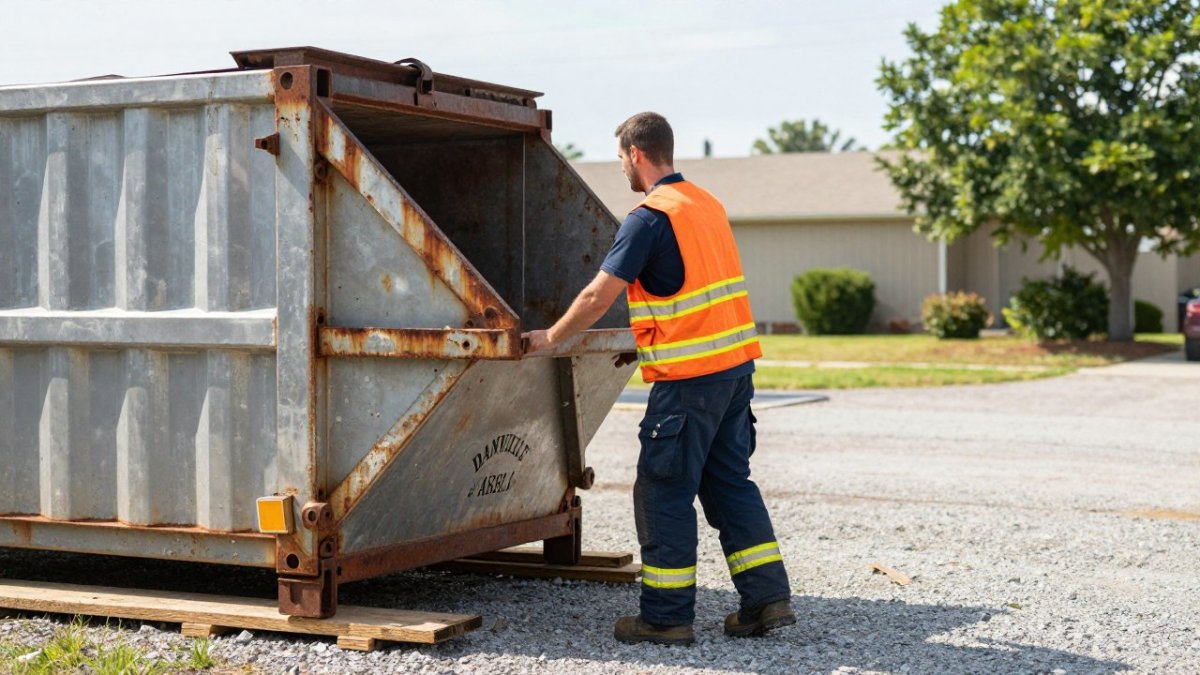
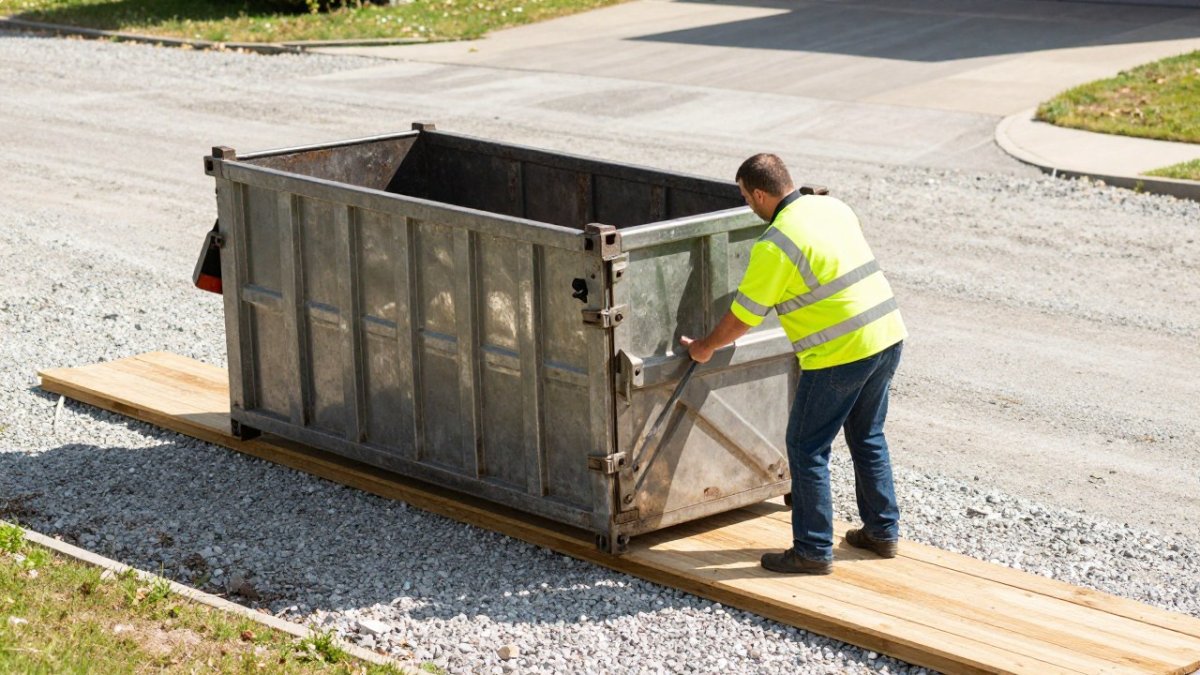
Bulk trash is the usual bottleneck. Many municipalities limit curbside pickup to a set number of bags or a single bulky item per week, so a whole-house cleanout often needs a rented container. If you need a 6 yard container for a small declutter, it can hold a modest pile of trash without filling your driveway. Donation items can go to local charities; find the options in our guide to donating furniture in Indianapolis.
Watch out: Do not stack donation bags in the garage "until the weekend." Set the pickup or drop-off date the same day you fill the first bag, or the pile becomes part of the clutter.
How to Start Decluttering When You Feel Overwhelmed
Feeling overwhelmed is normal. A big house can feel like too much to face. Start with the smallest possible step.
Pick one drawer, not one room.
Set a timer for ten minutes.
Take one bag of trash out to the bin.
Stop when you feel done, even if you have time left.
Small wins build momentum. Each finished shelf tells your brain the project is working. Keep a short list of what you have finished, and check it off each week.
If the project still feels too big, ask a friend or family member to help. Shared work goes faster, and it makes hard decisions easier to face.
Decluttering Mistakes to Avoid and Your Next Step
Most decluttering projects go off track for the same few reasons:
Starting in the most crowded room first.
Keeping items "just in case" for years.
Forgetting to plan where the discard pile will go.
Buying more storage bins before you have sorted anything. Sort first, then buy only what you need.
Decluttering alone when the clutter belongs to the whole household.
Measure Progress So the Project Does Not Stall
A decluttering project feels endless because the work is invisible. Track it in ways you can see.
Count finished zones, not hours. A zone is one drawer, one shelf, or one closet. Keep a running tally on the fridge; ten finished zones is a real milestone.
Photograph before and after each zone. The before photo is the proof you will want in week four when motivation drops.
Measure floor and surface area reclaimed. "I can see the garage floor again" is a better progress marker than a vague sense of accomplishment.
Set a weekly review. Fifteen minutes on Sunday to check the list, restock donation bags, and schedule the next session prevents the project from quietly dying.
Prevent Rebound Clutter
Decluttering without a maintenance routine is a temporary fix. A common pattern is for cleared surfaces to refill within a few months because nothing was assigned a home.
Give every kept item a designated home. If it does not have one, it will land on the nearest flat surface.
Adopt a one-in, one-out rule for categories that overflow easily: clothes, shoes, toys, kitchen gadgets, and linens.
Run a ten-minute nightly reset in the main shared rooms so clutter never accumulates past a day.
Schedule a seasonal sweep each time the clocks change. Fifteen minutes per room is enough to catch what crept back in.
Keep a permanent donation bag in a closet. When it fills, it leaves the house that week.
Bring the Household Along
One person cannot declutter a shared home alone without creating friction. Agree on ground rules before the first session: each person owns their own belongings, shared items need a joint decision, and nothing gets discarded without the owner's consent. Give children a vote on their own toys and a designated bin for what stays. Roommates should split shared spaces by zone rather than by item so no one is sorting someone else's mail.
Your Next Step
Write your top three goals, pick the first room on your list, and set one timer for 30 minutes today. Then start a zone tally and a permanent donation bag. Once the first room is clear and the routine is in place, the rest of the project gets easier.
Planning a larger cleanout? JRS Dumpster Rentals is a firefighter-owned and operated company that offers next-day rentals, driveway protection, and no hidden fees. Request to book and we will help you choose the right container size for your project.
Frequently Asked Questions
What is the 5 5 5 rule for decluttering?
The 5 5 5 rule is a quick sorting tactic: pick five items you can easily discard, five you could relocate to another room, and five that need a closer decision. It works well as a warm-up when a space feels too big to start. Use it inside one small area, such as a single drawer or shelf, so the task stays contained. Once you finish those fifteen items, move to the next area on your task list and repeat the process.
What should I remove first when decluttering?
Start with items that have no decision attached to them: trash, broken things, expired products and duplicates. These take little thought and clear space quickly, which builds momentum for harder choices. Next, move to categories that are easy to see at once, like clothing or kitchen gadgets, before tackling sentimental items or household papers. Working from easy to difficult keeps the project moving and reduces the urge to stop.
How long does it take to declutter a home?
The time depends on the size of the home, how much it holds and how many people are involved. A focused room-by-room plan usually runs in stages across several weeks, with a set number of hours each weekend. Schedule short sessions, such as 60 to 90 minutes, and use a timer to keep them consistent. Plan for a full day or more when you need to haul away large loads, and book a dumpster rental for bulky donations or debris from JRS Dumpster Rentals. Current rental pricing depends on the size you choose and the delivery dates, so request a quote through the JRS website for current figures.

Comments