
Common Dumpster Rental Mistakes to Avoid
Table of Contents
The Most Common Dumpster Rental Mistakes to Avoid
Most people rent a dumpster once or twice in their lives, which is why so many projects end up over budget, delayed, or hit with unexpected fees. Dumpster rental mistakes fall into predictable categories: sizing errors, permit oversights, weight limit violations, and prohibited material mix-ups. Every one is avoidable with upfront planning.
Underestimating Your Project's Debris Volume
The single most common mistake is guessing low on debris volume. A kitchen remodel feels manageable until cabinets come out, flooring gets pulled, and drywall stacks up. A 10-yard container that seemed generous fills after day one.
Estimate the volume you expect, then add a third more. Construction debris compresses less than anticipated, and bulky items like cabinetry and insulation consume cubic yardage fast. A second haul means a second delivery fee, extended rental period, and project delays. Getting the size right on the first call is always cheaper than correcting it mid-project.
Ignoring Local Permit Requirements
Permit requirements for dumpster placement vary significantly by municipality. Placing a roll-off dumpster on a public street or sidewalk almost always requires a permit from your local government. Skipping this step can result in fines, forced removal, or a container that gets towed before your project is done.
The U.S. Environmental Protection Agency's guidelines on solid waste management reinforce that local jurisdictions set their own rules for waste handling and container placement. Check with your city or county public works department before delivery day. A reputable hauling service will ask about placement during booking and flag permit requirements proactively.
Overlooking Hidden Fees in Your Rental Agreement
Read the rental agreement before you sign. Many providers bury overage fees, fuel surcharges, extended rental penalties, and disposal site fees in fine print.
The specific fees to watch for:
Weight overage charges: Triggered when your load exceeds the tonnage limit included in your base rental
Extended rental fees: Daily or weekly charges if you keep the container longer than the agreed period
Prohibited material surcharges: Fees for disposing of items the driver catches at pickup that shouldn't be in the container
Fuel surcharges: Variable add-ons tied to hauling distance or fuel costs
JRS Dumpster Rentals operates on a no-hidden-fees model with pro-rated additional weight pricing, so you pay for what you actually use rather than a flat overage penalty. Visit the JRS Dumpster Rentals pricing page to see current rates before you book.
How to Choose the Right Dumpster Size for Your Project
Choosing the right dumpster size is one of the most consequential decisions in the rental process. Get it right and the project runs smoothly. Get it wrong and you're either paying for unused capacity or scrambling for a second container mid-job.
Matching Container Dimensions to Your Waste Stream
Roll-off dumpsters are measured in cubic yards. Common sizes run from 10 yards to 40 yards, with 10- and 20-yard containers covering most residential projects.
Container Size | Best For | Approximate Capacity |
10 cubic yards | Single-room cleanout, small bathroom remodel | Equivalent to 3 pickup truck loads |
20 cubic yards | Kitchen remodel, multi-room renovation | Equivalent to 6 pickup truck loads |
30 cubic yards | Whole-home renovation, large estate cleanout | Equivalent to 9 pickup truck loads |
40 cubic yards | Major construction, commercial debris removal | Equivalent to 12 pickup truck loads |
Match the container to your specific waste stream. Heavy materials like concrete, tile, and roofing shingles fill weight limits before volume limits, so a smaller container may be the right call for dense debris.
What Happens When You Guess Wrong on Size
Undersizing forces a mid-project swap or second haul, both costing more than upgrading upfront. Oversizing wastes money on unused cubic yardage. Describe your project in detail when you call, and let the hauling service recommend the size.
Dumpster Rental Weight Limits Explained
Dumpster rental weight limits are the most misunderstood aspect of the rental process. Every container has a tonnage limit included in the base price. Exceeding it triggers overage fees.
Overloading the Container and Exceeding the Fill Line
Every roll-off dumpster has a fill line marked on the inside. Debris loaded above it creates a safety hazard during transport, and most hauling services reserve the right to refuse pickup or remove excess material at your expense.
Overloading is most common when mixing waste streams. Dense materials like concrete, soil, and brick consume weight capacity long before the container looks full. Discuss this with your provider upfront and ask whether a dedicated container or lower cubic yardage with higher weight allowance makes more sense.
How Overage Fees and Pro-Rated Tonnage Costs Work
Overage fees are charged per ton over the included tonnage limit. Pro-rated tonnage pricing, which JRS Dumpster Rentals uses, is fairer than flat overage penalties because you pay proportionally for what you actually exceed. According to the Federal Highway Administration's guidance on vehicle weight limits, commercial hauling vehicles are subject to federal and state weight restrictions, which is why providers enforce tonnage limits.
Always ask your provider to explain their overage structure before you commit.
Prohibited Items in Dumpster Rentals You Must Know
Not everything can go in a roll-off dumpster. Disposal sites and landfill regulations restrict certain materials entirely, and hauling services are legally required to enforce those restrictions.
Hazardous Waste and What Disposal Sites Refuse
Prohibited items in dumpster rentals typically include materials classified as hazardous waste under federal or state law. Common examples:
Paints, solvents, and adhesives
Batteries (lead-acid and lithium)
Pesticides and herbicides
Asbestos-containing materials
Motor oil and automotive fluids
Propane tanks and compressed gas cylinders
Medical waste and sharps
The EPA's guidelines on household hazardous waste disposal outline the categories of materials that require special handling and cannot enter standard waste streams. Mixing hazardous waste into a dumpster exposes you to fines and can result in the entire load being rejected at the disposal site.

Environmental Impact and Recycling Protocols
Many materials that go into roll-off containers, including clean wood, metal, drywall, and cardboard, can be sorted and diverted from the landfill through recycling protocols. Ask your provider whether they sort loads at the disposal site or work with facilities that practice waste diversion. Sorting heavy recyclables like metal separately from general household junk also helps you stay within weight limits on the main container.
How to Prepare Your Driveway for Heavy Dumpster Delivery
Knowing how to prepare your driveway for heavy dumpster delivery prevents costly damage. A fully loaded roll-off container and the truck delivering it can exert significant pressure on residential concrete or asphalt, particularly on older surfaces with existing cracks.

Driveway Protection and Load Distribution
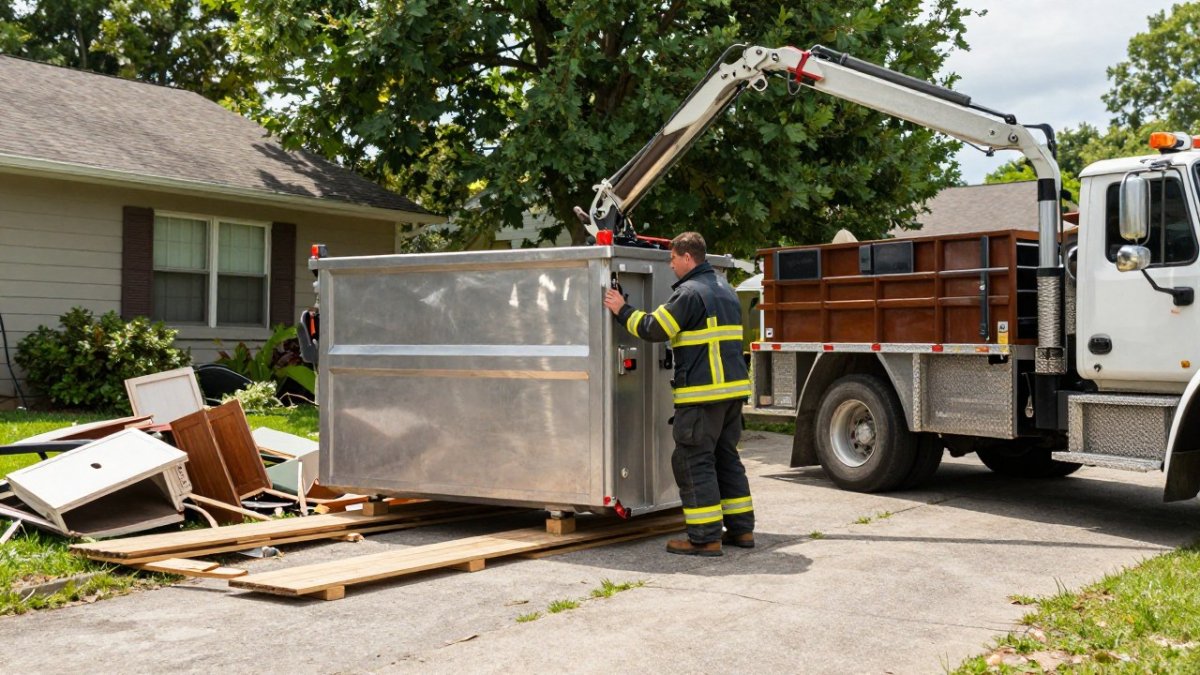
Place plywood boards under the container's contact points before delivery to distribute weight across a larger surface area and prevent steel wheels from pressing directly into concrete or asphalt. JRS Dumpster Rentals includes driveway protection as a standard part of the service.
Before delivery, clear the drop zone of vehicles, lawn furniture, and overhead obstructions. Confirm the path from the street to the placement spot is wide enough for the delivery truck, typically at least 10 feet of clearance on each side.
Pro Tip Mark the exact placement spot with chalk or cones before the driver arrives to prevent last-minute positioning decisions that may place the container on weaker sections of the driveway.
Post-Rental Site Damage Mitigation
Inspect your driveway after the container is removed. Look for surface impressions, cracking, or staining. Photograph any damage immediately and report it to the rental company before the truck leaves. Most surface impressions in asphalt are cosmetic and resolve with time. A reputable provider will have a clear process for addressing damage claims.
Placement, Accessibility, and Safety Compliance
Where you place the dumpster matters as much as which dumpster you choose. Poor placement creates safety hazards, blocks access, and can trigger permit violations.
Curbside Placement and Site Accessibility Rules
Curbside placement on a public street requires a permit in most municipalities. Skipping this step can result in fines exceeding the cost of the rental itself.
For private property placement, confirm that the delivery truck can access the site without driving over landscaping, irrigation systems, or underground utilities. Call 811, the national dig-safe line, before confirming a placement spot. According to the Common Ground Alliance's guidance on safe digging practices, contacting 811 before any ground disturbance is a legal requirement in most states.
Watch Out Never place a dumpster directly over a septic tank, drain field, or utility access point. The weight of a loaded container can collapse underground infrastructure, and repair costs far exceed the savings from skipping a site inspection.
Insurance and Liability Coverage During Your Rental
Ask your provider directly whether they carry general liability insurance and what their coverage includes during the rental window. A legitimate hauling service will confirm their coverage without hesitation. Your homeowner's insurance policy may also cover incidental damage caused by a rented container on your property.
Timing Your Rental: Seasonal Demand and Availability
Spring and early summer are peak periods for home renovation, estate cleanouts, and landscaping projects. Demand for roll-off containers spikes during these months, tightening availability and scheduling windows.
If your project falls between April and July, book your container at least a week in advance, ideally two. Fall is the second busiest period. Winter is the slowest season, which often means faster scheduling and more flexible rental durations.
JRS Dumpster Rentals offers next-day dumpster rentals, providing real flexibility for projects that come together quickly. But next-day availability depends on current inventory, so booking ahead remains the safer approach during peak periods.
Avoid These Dumpster Rental Mistakes With the Right Partner
Most dumpster rental mistakes stem from incomplete information at the booking stage. The right provider asks the right questions upfront, explains the rental agreement clearly, and doesn't surprise you with unexpected fees.
Key Takeaway The best way to avoid dumpster rental mistakes is to work with a provider who treats transparency as a baseline. Ask about weight limits, prohibited items, driveway protection, and overage pricing before you commit.
Choosing the wrong dumpster rental partner costs more than money. It costs project time, site damage headaches, and frustration. JRS Dumpster Rentals was built around transparency: firefighter-owned and operated, with no hidden fees, driveway protection included, and pro-rated weight pricing that keeps costs fair. Request to book through the JRS Dumpster Rentals website and get your project started with a provider you can count on.
Frequently Asked Questions
Q: What items are prohibited from being placed in a rented dumpster?
A: Most hauling services ban hazardous waste including paints, solvents, motor oil, batteries, propane tanks, asbestos, and certain electronics. Tires and appliances containing refrigerants are also commonly restricted. Disposal sites and landfill regulations determine what a hauler can legally accept, so always check your rental agreement before tossing anything questionable. Placing prohibited items in a roll-off dumpster can result in extra fees or the entire load being rejected.
Q: What are the most common mistakes when choosing a dumpster size?
A: The biggest mistake is underestimating debris volume. Homeowners often pick a 10-yard container for a kitchen remodel that actually generates enough construction debris to fill a 20-yard. Ordering too small means a second haul and additional rental costs. When in doubt, size up, the cost difference between adjacent container sizes is usually much smaller than the cost of a second delivery. A reputable hauling service can walk you through cubic yardage estimates based on your project type.
Q: What hidden fees should I look for in a dumpster rental agreement?
A: Watch for weight overage charges, fuel surcharges, extended rental duration fees, and fees for prohibited items found in the load. Some providers also charge separately for tonnage above the included limit. Before signing, ask exactly what is covered in the base price, how overage weight is billed, and whether pro-rated costs apply. Providers with no hidden fees will give you a clear breakdown upfront, if a quote is vague, ask for it in writing before delivery.
Q: Do I need a permit to place a dumpster on my property or street?
A: Placing a roll-off dumpster on private property, like a driveway, typically does not require a permit. Curbside placement on a public street is a different matter. Most municipalities require a permit for street placement, and requirements vary by jurisdiction. Contact your local city or county office to confirm permit requirements before your delivery date. Skipping this step can result in fines or forced removal of the container.
Q: Is it more cost-effective to rent a dumpster or haul debris to the landfill yourself?
A: For small, single-trip loads, hauling debris yourself may save money. For renovation projects, estate cleanouts, or construction debris removal, a dumpster rental almost always costs less when you factor in truck rental, multiple trips, tipping fees, fuel, and your time. A roll-off dumpster also lets you work at your own pace over the rental duration rather than making same-day trips. Check JRS Dumpster Rentals' pricing page to compare your specific project against self-haul estimates.
Q: How long can I typically keep a rented dumpster on-site?
A: Standard rental duration varies by provider, but most residential rentals run 7 to 14 days. Extended rental periods are usually available for an additional daily or weekly fee. If your project timeline is uncertain, ask your hauling service about pro-rated costs for extra days before you book. Planning your project phases in advance helps you avoid paying for days you don't need or scrambling to finish before pickup.
Comments