
Bin There Dump That vs JRS: A Local Comparison
Table of Contents
Bin There Dump That vs JRS: Which Local Service Fits Your Project?
Feature Comparison: JRS vs. Bin There Dump That
Container Specifications and Weight Limits
The Franchise Variable
Rental Period Mechanics
Why This Comparison Matters
How to Choose a Dumpster Size for Your Debris
Dumpster Rental Driveway Protection: What to Expect
Residential Dumpster Rental Prices: Hidden Fees to Watch For
The Five Fee Categories That Change Your Final Bill
What to Look for in a Contract
How Local Ownership Changes the Fee Structure
The Permit Question
Environmental Disposal Fees
The Service Difference: Local Ownership and Response Times
Which Dumpster Rental Provider Should You Book?
Conclusion
Frequently Asked Questions
Last Updated: September 9, 2026
Bin There Dump That vs JRS: Which Local Service Fits Your Project?
Choosing between Bin There Dump That vs JRS often comes down to a single question: do you want a national franchise experience, or do you want a neighbor who answers the phone? For homeowners and contractors in Danville, IN, the distinction matters more than the container itself.
The core difference is accountability. A franchise routes your call through regional systems and dispatches from a centralized depot (franchise.org). A local, firefighter-owned operation like JRS Dumpster Rentals lives in the same community you do, which changes how problems get solved.
Winner: JRS Dumpster Rentals for Danville-area residential and commercial projects that need next-day delivery, driveway protection, and transparent pricing without franchise overhead.
Before booking, understand that dumpster rental is a logistics service, and logistics is where local knowledge wins.
Feature Comparison: JRS vs. Bin There Dump That
Most comparison content online is either a franchise's own landing page or a local competitor's sales pitch. This section fills that gap by comparing the operational mechanics that determine whether your rental goes smoothly.
Container Specifications and Weight Limits
The physical container is where rental experiences diverge. Standard roll-off dumpsters come in various cubic yard sizes, but not every provider stocks every size, and weight limits vary significantly by region and disposal facility (the EPA).
Specification | JRS Dumpster Rentals | Bin There Dump That (Franchise Model) |
Container Sizes | 10, 15, 20, 30 cubic yards (typical local fleet) | 10, 14, 20, 30, 40 cubic yards (franchise standard) |
Standard Weight Allowance | Varies by container; typically 2-4 tons | Varies by franchisee; typically 2-4 tons |
Overage Pricing | Pro-rated per-ton overage | Flat fee or per-ton, franchisee discretion |
Standard Rental Period | 7-10 days (typical local policy) | 7-14 days (franchise standard) |
Extension Fees | Daily rate, published upfront | Daily rate, varies by franchisee |
Driveway Protection | Included with every rental | Optional add-on in many territories |
The container itself is largely a commodity. The difference is in the contract terms attached to it.
The Franchise Variable
Bin There Dump That operates as a franchise system. That means the brand standards for the container's appearance and the booking website are consistent, but the operational realities, truck availability, driver training, disposal fees, and overage enforcement, are controlled by the local franchisee who purchased the territory. Two customers in different states can have completely different experiences under the same brand name.
JRS Dumpster Rentals operates as a single, locally owned business. The owners are the operators. There is no regional office to route a complaint through and no corporate policy that overrides local judgment. When you call, you reach the people who will deliver and pick up the container.
Rental Period Mechanics
A common point of confusion is how the rental clock starts. Some providers count the rental period from the moment the container leaves the yard. Others start the clock at delivery. Still others include the pickup day in the rental period. A 7-day rental can mean 5 actual days of use depending on how the provider counts.
Ask any provider these three questions before booking:
Does the rental period start at delivery or when the truck leaves the yard?
Is the pickup day counted as a rental day?
What is the exact extension rate per day beyond the standard period?
Pro Tip A 20-yard container is a common choice for residential renovations and estate cleanouts. If your project involves heavy materials like concrete or dirt, ask about weight limits before you book, volume and weight are separate constraints.
Why This Comparison Matters
You are not renting a dumpster; you are renting a logistics agreement. The contract terms, weight allowances, rental periods, overage calculations, and protection policies, determine your final cost and your experience.

How to Choose a Dumpster Size for Your Debris
The most common mistake in dumpster rental is guessing your size wrong, then paying for a second haul. Start by estimating your waste volume in cubic yards, not by counting trash bags.
For a kitchen remodel, the amount of debris can vary. A full estate cleanout often requires a larger container because furniture and belongings compress differently than construction scrap. Yard waste after major tree removal follows its own volume curve, since branches do not lay flat.
Overestimate by one size if you are unsure. JRS Dumpster Rentals offers a variety of sizes and their team can help match your project to the right container.
Watch Out Underestimating your debris volume is the most expensive mistake in dumpster rental. A second haul means a second delivery fee, a second pickup, and days of lost time. When in doubt, size up.
Dumpster Rental Driveway Protection: What to Expect
Driveway protection is not an upgrade, it is standard practice for any reputable provider. When a roll-off truck delivers a loaded container, the weight transfers through steel wheels directly onto your concrete or asphalt, which can crack or stain surfaces without protection (concrete.org).
JRS Dumpster Rentals includes driveway protection with every rental, placing wooden boards under the container wheels to distribute weight and prevent surface damage. This matters for homeowners with newer driveways or those who have invested in stamped or colored concrete.
Ask any provider these three questions before booking:
What exactly do you place under the wheels?
Is the protection included or an add-on fee?
What happens if my driveway cracks during placement or pickup?
A franchise may or may not include this protection depending on the local operator's policies. With a local provider, the answer is straightforward because the person giving it is the person who will do the work.
Residential Dumpster Rental Prices: Hidden Fees to Watch For
Residential dumpster rental prices look simple on a rate sheet, but the real cost appears in the fine print. Most providers advertise a base rate covering delivery, pickup, and a standard weight allowance. The gap between the advertised rate and your final invoice can sometimes include hidden fees.
The Five Fee Categories That Change Your Final Bill
1. Weight Overage Charges
Every dumpster rental includes a weight allowance, typically measured in tons. Exceeding it triggers an overage charge. Some providers use a flat penalty fee; others charge a per-ton rate. Always ask for the per-ton rate and exact weight limit in writing before booking.
2. Rental Period Extensions
The standard rental period varies, after which daily extension fees apply. Some providers start the clock when the truck leaves the yard, not when the container arrives. Others count the pickup day as a full rental day. Ask for the exact start and end dates in writing.
3. Fuel Surcharges
Fuel surcharges are increasingly common. Some providers build fuel costs into the base rate; others add a separate line item. Ask directly: "Is there a fuel surcharge on top of the advertised rate?" If yes, get the exact amount in writing.
4. Prohibited Item Fees
Every provider has a list of prohibited items, hazardous materials, tires, batteries, electronics, and certain appliances. If one is discovered during pickup, the driver may refuse the load or charge a removal fee. Ask for the list before booking and confirm what happens if a prohibited item ends up in the container.
5. Permit and Placement Fees
If the dumpster will sit on a public street, sidewalk, or other public right-of-way, your municipality likely requires a permit, typically the homeowner's responsibility. Some providers handle the application; others expect you to manage it. Cost varies by municipality. Ask whether the provider includes permit handling.
What to Look for in a Contract
A transparent provider will put every fee in writing before you sign. A provider with hidden fees relies on vague language. Look for these contract terms:
Exact weight allowance stated in tons, not "standard allowance"
Per-ton overage rate stated as a dollar amount
Rental period with specific start and end dates
Daily extension rate stated as a dollar amount
Fuel surcharge either included in the base rate or stated separately
Prohibited items list attached to the contract
Permit responsibility assigned to a specific party
Watch Out The most expensive mistake in dumpster rental is not reading the weight allowance clause. A 20-yard container can hold several tons of construction debris, but the standard allowance varies. If you are removing concrete, brick, or dirt, ask about weight limits before you book, these materials are heavy and will push you over the allowance quickly.
How Local Ownership Changes the Fee Structure
When the owner is the operator, there is no regional office to add administrative fees or corporate surcharges.
JRS Dumpster Rentals uses pro-rated additional weight pricing, which means you only pay for the actual excess weight, not a flat penalty fee. This approach aligns the provider's incentive with yours, the goal is to help you stay within your allowance, not to profit from your mistake.
The Permit Question
Before booking, call your local municipal office to determine whether a dumpster permit is required. A container on your driveway typically does not require a permit; one on the street or in a public alley almost always does. A local provider can advise on requirements and may handle the paperwork.
Environmental Disposal Fees
Some providers add a separate environmental or disposal fee to cover recycling and landfill costs. The fee is legitimate, but it should be disclosed upfront. Ask whether the advertised rate includes disposal.
The Service Difference: Local Ownership and Response Times
Response time is where local ownership creates a measurable difference. A franchise dispatches from a regional depot, so your delivery window depends on truck availability across a wide area. A local operation with a 28-mile service radius can offer next-day rentals.
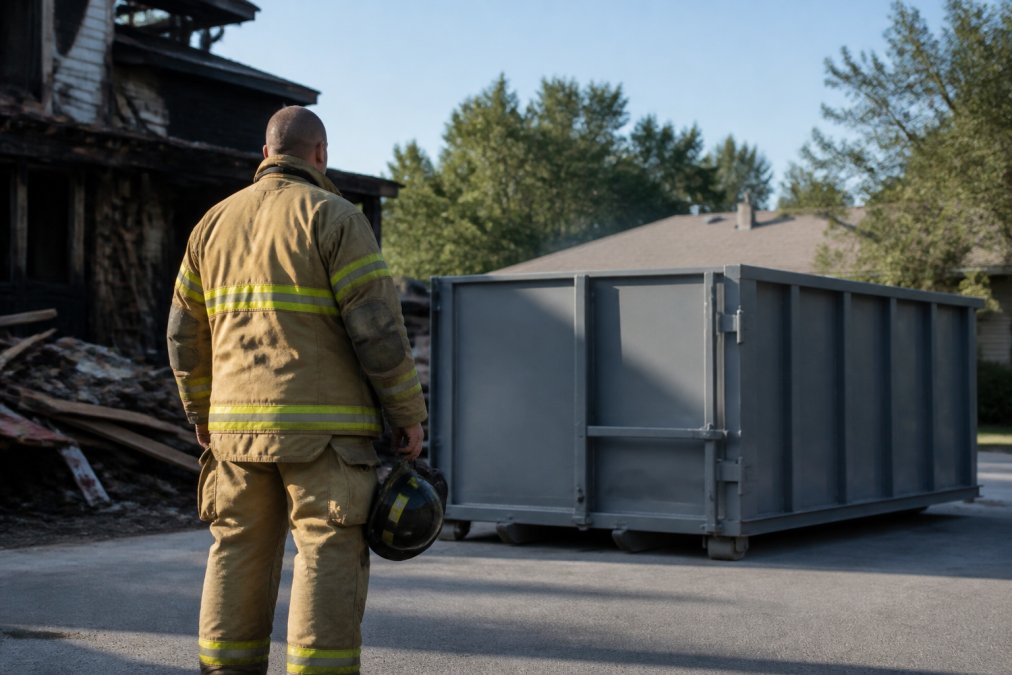
JRS Dumpster Rentals is firefighter-owned and operated, which is not a marketing tagline. Firefighters work in high-stakes environments where reliability is non-negotiable, and that mindset carries into the business.
If a delivery is delayed or a pickup needs rescheduling, a local owner can adjust quickly.
Property managers and contractors should also ask about scheduled pickups. A local provider can handle recurring deliveries because they control their own fleet and schedule.
Which Dumpster Rental Provider Should You Book?
For projects within a 28-mile radius of Danville, IN, JRS Dumpster Rentals is the stronger choice for most residential and commercial needs. Next-day availability, included driveway protection, and pro-rated weight pricing address the three biggest pain points: speed, surface damage, and surprise fees.
Bin There Dump That works fine if you are in a territory with a responsive franchisee, but you are gambling on the local operator. With JRS Dumpster Rentals, the owner is the operator and the pricing model is built around transparency rather than penalty fees.
For large-scale debris management, construction contractors should confirm the provider can handle job-site logistics, including site preparation and container placement in tight spaces. A local team can advise on permit requirements and placement strategies.
Conclusion
The dumpster rental industry runs on trust, because you are handing over a significant disposal project to a company you may only interact with twice. Bin There Dump That vs JRS comes down to whether you prefer a national brand with variable local service or a firefighter-owned local operation with a defined service area and transparent pricing.
At JRS Dumpster Rentals, we built our business around doing the right thing for every customer, with next-day rentals, driveway protection included, and no hidden fees. Whether you need a small dumpster for a bathroom remodel or a larger container for a full estate cleanout, our team is ready to help you match the right size to your project.
Frequently Asked Questions
What is Bin There Dump That?
Bin There Dump That is a national franchise network of dumpster rental companies. They operate in many cities across the US, including in Indiana. Their business model relies on franchise owners who follow a national brand standard. This can offer consistency, but the service quality and pricing often depend on the specific local owner. When you call, you are routed to a local franchise, not a single headquarters.
What should I look for when comparing dumpster rental quotes?
When comparing dumpster rental quotes, look beyond the base price. Ask for a total breakdown that includes delivery, pickup, and the weight limit. Clarify what happens if you exceed that limit, as overage fees can add up quickly. Confirm if the quote includes driveway protection, like wooden planks, and ask about any fuel surcharges or environmental fees. A clear, itemized quote with no hidden charges is the best sign of a reliable provider.
Does driveway protection matter when renting a dumpster?
Yes, driveway protection matters. A loaded dumpster can weigh several tons, and the metal edges of the container can crack or stain concrete and asphalt. Professional services use wooden planks or boards under the container edges to distribute the weight and protect the surface. Before the driver arrives, check that your quote includes this protection. It is a simple step that prevents expensive damage to your property.
What factors influence the total cost of a dumpster rental?
Several factors influence the total cost of a residential dumpster rental. The primary drivers are the dumpster size you select and the rental duration. The type of waste you dispose of matters, as heavier materials like concrete or dirt require a higher weight allowance. Your location relative to the provider's service area also plays a role. Finally, ask about overage fees and if the quoted price includes delivery, pickup, and taxes.
The challenge is finding a provider who treats your driveway like their own and your timeline like a promise. Request to book with JRS Dumpster Rentals and get a rental that arrives when scheduled, protects your property, and comes with honest, pro-rated pricing.
Request to Book

Comments