
Dumpster Rental for Small Kitchen Remodels: 2026 Guide
Table of Contents
How to Size a Dumpster for a Small Kitchen Remodel
What Actually Comes Out of a Kitchen Tear-Out
10 Yard Dumpster Dimensions: The Sweet Spot for Most Kitchen Jobs
Average Dumpster Rental Cost for a Kitchen Remodel: What Drives the Price
How to Protect Your Driveway From a Dumpster
What You Can and Can't Throw in a Kitchen Remodel Dumpster
The Allowed List
The Banned List and Why
The Sorting Mechanism Most Guides Miss
Permits, Placement, and Tight Driveways: Logistics Most Guides Skip
The Right-of-Way Permit, Step by Step
Space-Saving Strategies for Small Driveways
Conclusion
Frequently Asked Questions
Last Updated: September 10, 2026
How to Size a Dumpster for a Small Kitchen Remodel
Getting the size right makes or breaks dumpster rental for small kitchen remodels. Guessing leads to a half-empty bin or an overloaded one with overage fees. Estimate debris volume by material, then match it to a bin size with room to spare.
Dumpster rental is the temporary delivery of a roll-off container to a job site for debris collection, with pickup scheduled when the project wraps. For a small kitchen, that container almost always lands between 10 and 20 cubic yards. Here's the sizing logic in practice:
10-yard bin: Fits a cosmetic refresh (cabinets, countertops, flooring, no gut demo)
15-yard bin: Handles a full tear-out of a small galley kitchen
20-yard bin: Safer for a kitchen plus adjacent hallway or dining demo
What Actually Comes Out of a Kitchen Tear-Out
A small kitchen tear-out generates more volume than most people expect (the EPA). Cabinet removal alone can fill a 10-yard bin roughly halfway once you account for the hollow box shape and the doors (the EPA). Add countertops, tile, drywall, and old appliances, and a "small" kitchen can produce 8 to 12 cubic yards of construction waste.
Heavy items matter as much as bulky ones. Tile, mortar, and old countertops add serious weight that counts against your tonnage allowance. Put bulky-but-light debris on top, heavy debris on the bottom, and keep anything donatable or recyclable out of the bin.
10 Yard Dumpster Dimensions: The Sweet Spot for Most Kitchen Jobs
The 10 yard dumpster dimensions are the number to memorize: roughly 10 feet long, 8 feet wide, and 3.5 to 4 feet tall. That footprint holds about 10 cubic yards, or roughly 3 to 4 pickup truck loads of debris. For a small kitchen remodel, it is the most common bin size for good reason.
Bin Size | Dimensions (approx.) | Best For | Watch Out For |
10 yard | 10 ft x 8 ft x 3.5-4 ft | Small kitchen refresh, one-room demo | Fills fast with cabinets |
15 yard | 12-14 ft x 8 ft x 4-5 ft | Full galley kitchen tear-out | Needs more driveway length |
20 yard | 14-16 ft x 8 ft x 4.5-6 ft | Kitchen plus adjacent rooms | Weight adds up quickly |
The height makes the 10-yard bin easy to load, you can toss debris over the side without a ramp, which matters when hauling cabinets solo. The trade-off is capacity: a 10-yard bin punishes underestimates. When in doubt, size up.
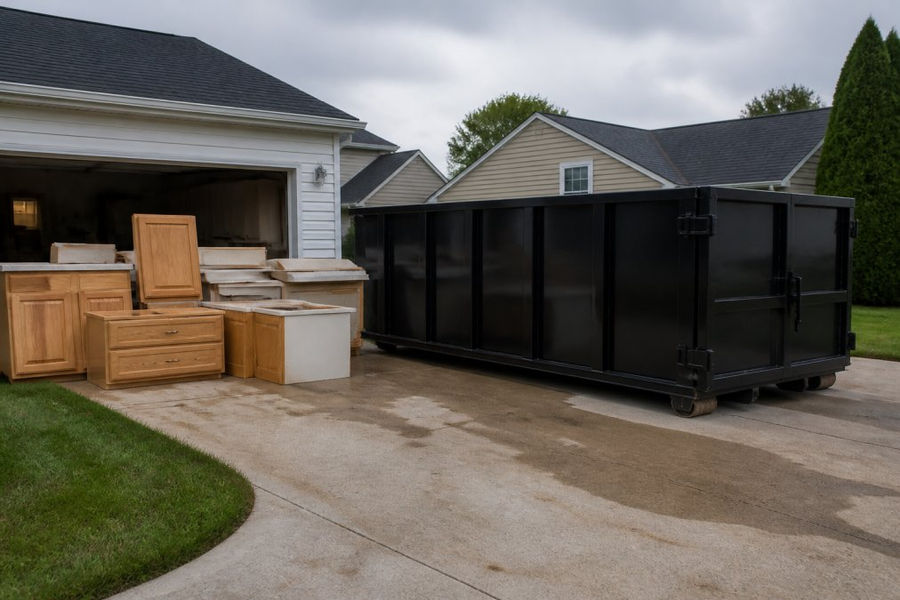
Pro Tip Measure your driveway length before you order. A 10-yard bin needs about 12 feet of clearance for the truck to drop it, and a 20-yard needs closer to 20 feet. Ordering a bin that won't fit means a wasted delivery fee.
Average Dumpster Rental Cost for a Kitchen Remodel: What Drives the Price
The average dumpster rental cost for a kitchen remodel depends on four variables, not one flat rate: bin size, rental duration, debris weight, and placement. Any quote that ignores these is padded or hiding fees. Ask for the breakdown before you commit.
What actually moves the price:
Bin size: Bigger bins cost more, but the jump from 10 to 15 yards is smaller than most people assume
Rental duration: Most rentals include a set window; extensions add daily charges
Tonnage allowance: Every rental includes a weight limit, and overage fees apply per ton beyond it
Placement: A bin on the street may need a disposal permit, which adds cost and lead time
Hidden costs break budgets. Fuel surcharges, environmental fees, and "delivery zone" charges can appear on the final invoice if they weren't in the original quote. JRS Dumpster Rentals offers pro-rated additional weight pricing.
How to Protect Your Driveway From a Dumpster
Knowing how to protect driveway surfaces from a dumpster saves thousands in repair bills. A loaded roll-off bin concentrates enormous weight on its steel wheels, and that pressure can crack concrete or stain asphalt (cement.org). The fix is cheap compared to the damage.
Driveway protection methods that work:
Lay down plywood boards (at least 3/4 inch) under each wheel contact point
Use a protective mat or rubber pad for asphalt in summer heat
Position the bin on the flattest, most solid part of the driveway
Keep the bin off the street unless you have a permit
Never place a bin on a driveway with existing cracks or soft spots
Concrete handles the weight better than asphalt, especially in warm weather when asphalt softens. If your driveway is asphalt and the forecast is hot, ask about a protective mat. Skipping protection to save a few minutes often means paying for a cracked slab later.
What You Can and Can't Throw in a Kitchen Remodel Dumpster
The allowed/banned list is the easy part. Most guides skip how to sort, and sorting is where you either save money on tonnage or eat a contamination fee.
The Allowed List
Cabinets (wood, particleboard, MDF) and cabinet doors
Countertops (laminate, butcher block, solid surface; see stone note below)
Flooring (tile, vinyl, hardwood, laminate)
Drywall, mortar, thinset, and grout
Wood trim, framing lumber, and packaging
Sinks, faucets, and non-refrigerant appliances
The Banned List and Why
Paint, solvents, adhesives, and caulk, classified as household hazardous waste; a landfill will reject the entire load if these are found.
Refrigerant-containing appliances, refrigerators, freezers, and window AC units contain refrigerant that must be recovered by a certified technician before disposal. Many haulers will accept the appliance only if the refrigerant has been evacuated and tagged.
Treated or painted wood, pressure-treated lumber and lead-painted trim are restricted in many jurisdictions because of what they leach in a landfill.
Electronics and batteries, e-waste and lithium batteries are banned from most construction debris streams and are a fire risk in the truck.
Liquids of any kind, including leftover cleaning products and paint cans with wet paint.
Watch Out A single banned item can trigger a rejected load, a contamination fee, and a second hauling charge. When in doubt, set the item aside and ask your hauler before you toss it, a two-minute call beats a $200 surprise.
The Sorting Mechanism Most Guides Miss
Tonnage is billed by weight, and weight is the cost driver on a kitchen remodel. Sorting debris before it hits the bin is the highest-leverage move you can make: it keeps heavy inert material from riding on top of light bulky material and diverts recyclables out of the bin entirely.
Separate into four piles before anything goes in the bin:
Heavy inert, tile, mortar, thinset, concrete, stone countertop remnants. These go in first, on the bottom, because they're dense and you want them low.
Bulky light, cabinets, doors, drywall, trim. These go on top and fill the air space.
Recyclable metal, copper plumbing, brass fixtures, steel appliance shells, aluminum. Scrap metal has resale value; your hauler may credit it, or a local scrap yard will take it. Either way, it should not be in the bin.
Donatable, cabinets in good condition, working appliances, light fixtures. Habitat for Humanity ReStores and similar organizations accept these in many markets, and some will pick up.
Why this matters on a small kitchen: A 10-yard bin has a tonnage allowance that a full tear-out can approach once tile and mortar are in the mix. Pulling 200-400 pounds of metal and donatable items out of the load can mean the difference between staying under the allowance and paying an overage fee. It also reduces landfill waste, which matters if your jurisdiction has a construction-debris diversion requirement.
Pro Tip Ask your hauler two questions before you book: "Do you credit scrap metal?" and "Do you offer a separate recycling-only haul?" Not every company does, but the ones that do can turn a disposal cost into a partial offset.
Permits, Placement, and Tight Driveways: Logistics Most Guides Skip
Most guides tell you to "check with your city" about a permit and stop there. That advice is useless three days before demo day. Here's the actual sequence, plus space-saving moves that keep a bin on your property so you never need a street permit.
The Right-of-Way Permit, Step by Step
If any part of the container touches a public street, sidewalk, alley, or parking lane, you need a right-of-way (sometimes called an encroachment or obstruction) permit. The issuing office varies by jurisdiction but is almost always one of these three:
Public Works / Department of Transportation, most common for residential streets
Department of Permitting and Inspections, common in larger cities
Police Department traffic division, some smaller municipalities handle it here
How to actually get it:
Call the main line and ask specifically for the "right-of-way permit for a temporary dumpster or roll-off container." Using that exact phrase saves a transfer.
Ask for the application by email or the online portal link. Most are now digital; a few still require a paper form dropped off in person.
Have your contractor's name, the container dimensions, and the placement address ready, the form asks for all three.
Ask the lead time out loud: "If I submit today, when will it be approved?" Typical answers range from same-day in small towns to 5-10 business days in larger cities.
Ask whether the permit must be posted at the site and whether reflective cones or barricades are required around the container.
What it costs and how long it lasts: Permit fees for a residential dumpster are usually modest, a routine administrative fee rather than a major expense, but duration matters more. Many permits are issued for a set window (commonly 7 to 14 days) and require renewal if the bin stays longer. Ask about the renewal process before you need it, because an expired permit can mean a citation.
Watch Out Placing a container on the street without a permit can result in a citation, a forced removal, and in some jurisdictions a fine that exceeds the rental cost itself. If the bin won't fit on private property, get the permit before delivery, not after.
Space-Saving Strategies for Small Driveways
A standard 20-yard roll-off needs roughly 20 feet of straight, clear driveway; a 10-yard needs about 12 feet. If your driveway is shorter, or you can't block the only car lane, you have four options:
Place lengthwise along the edge. A 10-yard bin set parallel to the driveway edge often leaves a walkable or drivable lane beside it. Measure first, you need the bin's 8-foot width plus clearance.
Use a smaller bin and schedule a swap. Two 10-yard hauls often cost less than one 20-yard that blocks the whole driveway for two weeks. Ask your hauler about a mid-project swap rate before you book.
Stage on a gravel or dirt pad. If your driveway is asphalt and the forecast is hot, a side yard or gravel pad protects the surface and frees the driveway entirely.
Coordinate drop and pick around your contractor. If the crew demos Monday through Wednesday, have the bin dropped Monday morning and picked up Thursday, a shorter occupancy window means less disruption and, on street placements, a shorter permit window.
For genuinely tight driveways, the 10-yard bin placed lengthwise is the workhorse. If even that won't fit, ask your hauler about a bag-style or trailer-style option before you assume a roll-off is your only choice.
Conclusion
Sizing a bin, protecting your driveway, and sorting debris correctly are the three moves that keep a kitchen remodel on budget. Get them wrong and you're paying overage fees, repair bills, or permit fines you never planned for.
JRS Dumpster Rentals is firefighter owned and operated, offering next-day delivery, driveway protection included with every rental, pro-rated additional weight pricing, and no hidden fees. We serve homeowners and contractors within a 28-mile radius of Danville, IN, with versatile bin sizes for everything from a small kitchen tear-out to a full estate cleanout.
Request to Book with JRS Dumpster Rentals and get a right-sized bin delivered without the surprise charges.
Frequently Asked Questions
What size dumpster is best for a small kitchen remodel?
Most small kitchen remodels fit in a 10-yard dumpster. That size handles roughly 10 to 12 kitchen trash bags of debris, which covers cabinet removal, countertop disposal, and tile removal from a typical galley or L-shaped kitchen. If you are also tearing out flooring, drywall, or a full wall, step up to a 15 or 20-yard container. When in doubt, ask the rental company to walk through your project scope before booking.
How much does dumpster rental for a small kitchen remodel cost?
Pricing depends on container size, rental duration, debris weight, and your location. A base rate usually includes delivery, pickup, a set tonnage allowance, and a rental window. Costs rise when you exceed the weight limit, keep the dumpster longer, or need a second haul. Ask for a written quote that lists overage fees, environmental fees, and any fuel surcharges so nothing shows up later. JRS Dumpster Rentals publishes current pricing on its website.
Do I need a permit to put a dumpster in my driveway?
In most cases, a dumpster placed entirely on private property, like your own driveway, does not require a permit. A disposal permit typically becomes necessary when the container sits on a public street, sidewalk, or right-of-way. Rules vary by municipality, so call your local public works or code enforcement office before delivery. If you need street placement, apply early since approval can take several business days.
Can I put old appliances and cabinets in a kitchen remodel dumpster?
Cabinets, countertops, tile, drywall, and most appliances are fine. Refrigerators and other units containing refrigerants usually need the coolant removed and tagged before disposal, so check with your rental company first. Hazardous materials like paint, solvents, and asbestos-containing tile are prohibited. If you are unsure whether an item qualifies, ask before you toss it in. Mixing a banned item into the load can trigger a rejected haul and extra fees.
Request to Book

Comments