
7 Steps to Schedule Dumpster Pickup for Residential Projects
Last Updated: November 9, 2026
Quick Summary
To schedule dumpster pickup for residential projects, first confirm you need a roll-off bin rather than municipal bulky-item collection, then choose your size and rental period and book delivery and pickup by phone or online. Have your address, project type, and preferred dates ready, and share access notes like a narrow driveway or gate code.
Municipal crews take only a few large items on a set schedule and often refuse construction debris.
Most home renovations need a rental period of a few days to a couple of weeks.
The truck needs a straight shot to the drop zone with no parked cars, low branches, or tight fences.
Call ahead to change a pickup date; same-day requests are the hardest to accommodate.
A bin on a public street or sidewalk often requires a right-of-way permit from the city or county.
Not sure which dumpster size fits your project?
JRS Dumpster Rentals offers next-day delivery, driveway protection, and no hidden fees.
Table of Contents
Municipal Bulky-Item Pickup vs. Private Roll-Off Dumpster Pickup
The fastest way to schedule dumpster pickup for residential projects is to know which service you actually need before you call anyone. Most homeowners mix up two very different systems: the city's bulky-item collection and a private roll-off rental. At JRS Dumpster Rentals, we hear this confusion every week, and it's the reason some people wait days for a pickup that was never going to happen.
Here's the short version. Municipal crews take a few large items on a set schedule. A roll-off dumpster holds tons of debris for days or weeks while you work. Pick the wrong one and you either miss your collection day or pay for space you don't need.
When the City Handles It
Your local solid waste division is the right call for small, occasional loads. Think one old couch, a mattress, or a few bags of yard waste. These programs usually run on a scheduled collection day, and you often have to request pickup in advance.
The catch: cities limit what they'll take and how much. Many won't touch construction waste, demolition debris, or anything from a paid contractor's job. If your project fills more than a couple of curbside items, the city route falls short.
When a Roll-Off Bin Is the Better Call
A roll-off dumpster is the better call for any project that produces real volume. Kitchen remodels, bathroom tear-outs, estate clean-outs, roofing, and landscaping all generate too much waste for curbside service.
A roll-off bin stays on your property for a set rental period, so you fill it as you go instead of racing a collection truck. That flexibility is the whole point. You load debris over days, not hours.
The trade-off is that you schedule delivery and pickup yourself, and you're responsible for what goes in the bin. We'll walk through that process step by step below.
Step 1: Match the Dumpster Size to Your Project
Start with size, because it drives everything else. A bin that's too small means a second haul. A bin that's too big wastes space you're paying for.
Most residential jobs fall into a few rough buckets:
Small clean-outs and single-room tear-outs: a compact bin handles it
Kitchen or bathroom remodels: a mid-size bin usually covers the debris
Whole-home renovations and additions: a large bin or multiple swaps
Yard waste and landscaping: size depends on tree limbs and soil volume
A common mistake is guessing based on how the pile looks on the floor. Debris compacts and stacks differently once it's in a container. If you're unsure, size up rather than down.
For a deeper breakdown of sizing, see our guide on choosing the right dumpster size for a remodel.
Step 2: How Long to Rent a Dumpster for a Home Renovation
Most home renovations need a rental period of a few days to a couple of weeks. The right duration depends on how fast your crew works and whether you're doing the labor yourself.
Here's how to think about it:
Weekend DIY projects: a short 2-day rental often fits
Standard kitchen or bath remodels: a 3-5 day window covers most of the work
Larger renovations or staged clean-outs: a 7-day rental gives breathing room
The thing nobody tells you about rental periods is that the clock matters more than the bin. If your project stalls waiting on materials, you're paying for idle time. Build your schedule around the demolition phase, when debris piles up fastest.
Once you know your timeline, you can review the available plans and pricing to pick the duration that fits.
Match the rental period to the job so you are not paying for idle time.
Project type | Rental period |
Weekend DIY projects | Short 2-day rental |
Standard kitchen or bath remodels | 3-5 day window |
Larger renovations or staged clean-outs | 7-day rental |
Step 3: Dumpster Rental Delivery and Pickup, Explained
Dumpster rental delivery and pickup is a two-part service: the hauler drops the bin at your project location, you fill it, then the hauler removes it.
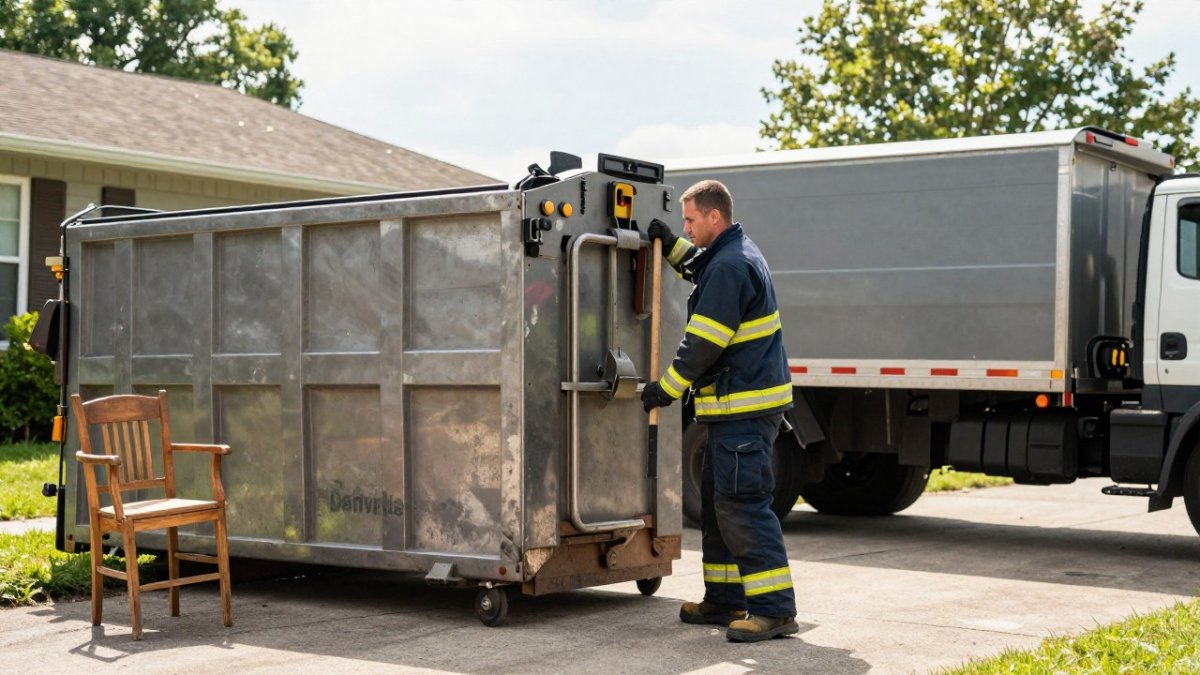
On delivery day, the truck needs a straight shot to where the bin will sit. That means no parked cars, low branches, or tight fences in the way.
Driveway protection is included with our rentals, so your concrete or asphalt is protected during delivery and pickup.
Pickup works the same way in reverse. The driver needs the same clear path and a bin that's ready to travel.
A pickup readiness checklist helps you avoid that outcome. Run through these items the day before your scheduled pickup:
Confirm the truck can reach the bin without moving vehicles or equipment
Verify overhead clearance along the approach path
Level the load and keep it below the container's sides
Remove prohibited items such as tires, paint, and electronics
Secure any tarp or cover
Clear the area around the bin of loose debris and tools
Confirm the gate or driveway is wide enough for the truck
Watch out: overloading the bin is the most common reason a pickup gets delayed or refused, and it can trigger weight overage charges. If you're worried about weight, read our guide on how to avoid dumpster weight overage fees before you finish loading.
Plan for both trips when you book.
Step 4: Schedule the Pickup With a Phone Call or Online Booking
You can schedule a dumpster pickup by phone or online, and both take only a few minutes. Have your address, project type, and preferred dates ready before you reach out.
The scheduling timeline looks like this:
Confirm your bin size and rental period
Pick a delivery date, often next-day if you call early
Set a target pickup date based on your project
Share any access notes, like a narrow driveway or gate code
Get confirmation of what's included in your quote
A phone call is best if you have questions about sizing or access. Online scheduling is faster if you already know what you want.
When you're ready to lock in dates, you can book online and choose your drop-off and pickup window.
Step 5: How to Prepare a Dumpster for Pickup
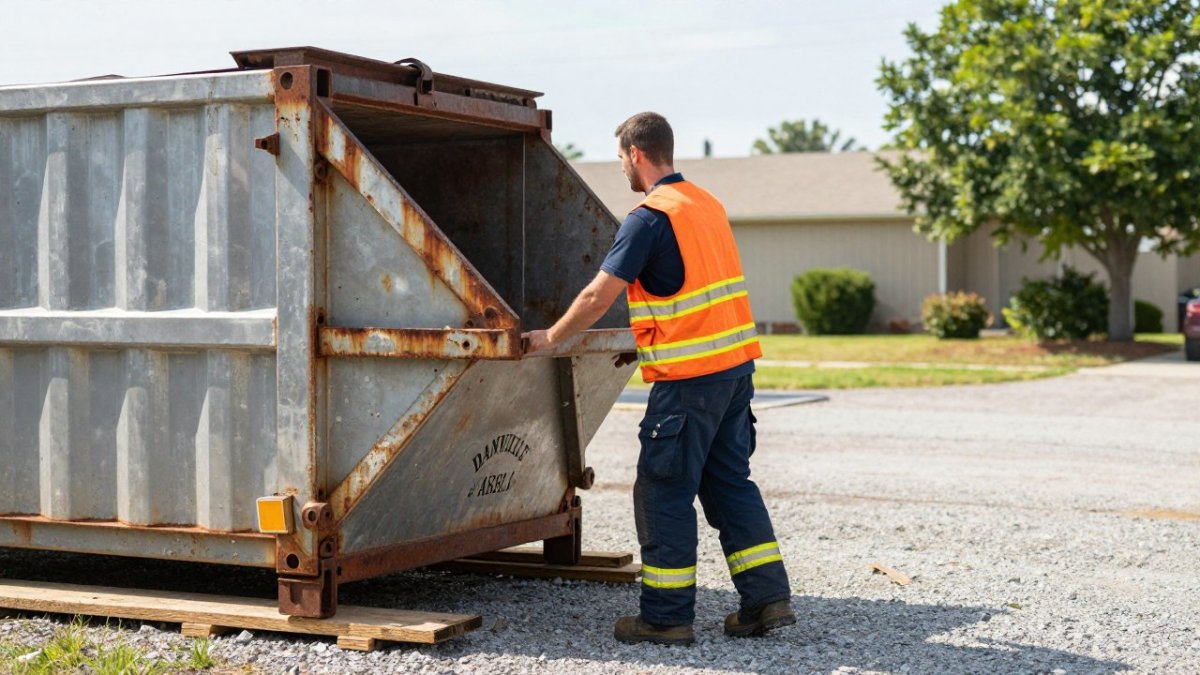
To prepare a dumpster for pickup, level the load, secure any tarp, and clear the area around the bin so the truck can reach it. A few minutes of prep prevents delays and surprise fees.

Run through this checklist before pickup day:
Fill the bin no higher than its sides
Spread the load evenly instead of mounding it in one corner
Keep heavy material like concrete and dirt toward the middle
Remove prohibited items such as tires, paint, and electronics
Move tools, ladders, and debris away from the bin
Make sure no cars block the truck's path
Confirm the gate or driveway is wide enough for the truck
Watch out: overloading the bin is the most common reason a pickup gets delayed. It also triggers weight overage charges. If you're worried about weight, read our guide on how to avoid dumpster weight overage fees before you finish loading.
Step 6: Dumpster Pickup Date Change, Missed Collections, and Delays
A dumpster pickup date change is usually easy if you call ahead. Most haulers can move your pickup a day or two either way, as long as the truck schedule allows.
Missed collections and delays happen for a few common reasons:
The bin wasn't accessible when the truck arrived
The load was overfilled or contained banned items
Weather or road conditions pushed the schedule back
A same-day change request came in after routes were set
The fix is simple: confirm your pickup date a day in advance and make sure the bin is ready. If something changes on your end, call as early as you can. Same-day requests are the hardest to accommodate.
We build flexible scheduling into every rental, so a shift in your project doesn't turn into a headache.
Step 7: Permits, Placement Rules, and What Can't Go In
Permits and placement rules depend on where the bin sits. A dumpster on your own driveway usually needs no permit.
Here's how to think about the three common placement scenarios:
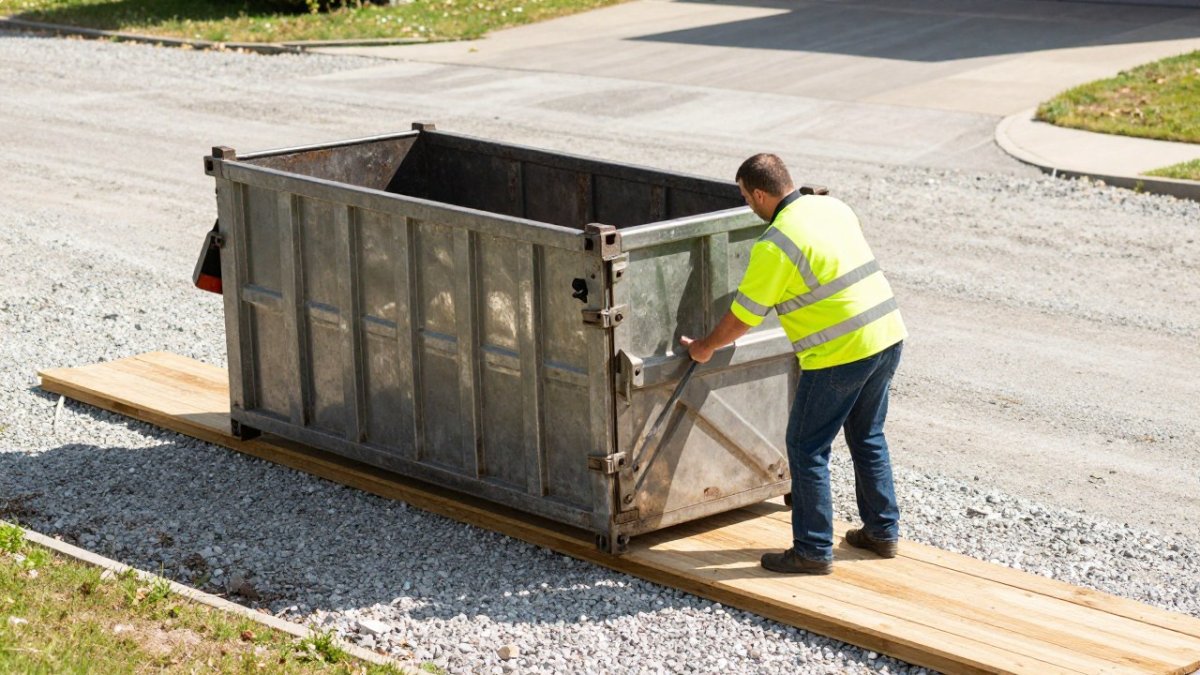
Private driveway or yard: Typically no permit required. Check for HOA rules and make sure the bin doesn't block a shared easement or fire lane.
Public street or sidewalk: Often requires a right-of-way permit from the city or county. Some jurisdictions also require reflective cones, barricades, or a traffic control plan. Apply early, because approval can take several business days.
Alley or shared access: Rules vary widely. Confirm with your local public works department whether the alley is public or private, and whether a permit is needed for temporary obstruction.
Placement matters for more than paperwork. Keep the bin off storm drains, away from property lines, and clear of overhead power lines. If you live in an HOA, check the rules before delivery.
As for what can't go in, most haulers prohibit:
Tires
Paint, solvents, and other liquids
Batteries and electronics
Medical waste
Appliances with refrigerant
These items need separate disposal. Putting them in the bin can mean a refused pickup or a penalty. At pickup, the driver may inspect the load, and if restricted items are visible or the load appears overweight, the hauler may decline the pickup.
Local rules vary by address, so check our residential dumpster rental guide for placement and restriction details in your area.
Frequently Asked Questions
How far in advance should I book a residential dumpster?
Book as soon as your project dates are firm, ideally several days to a week ahead. Next-day dumpster rental may be available, depending on schedule. Confirm the delivery window, the rental period, and the pickup date in the same conversation so nothing gets lost. If your timeline shifts, call before the scheduled collection day to move the dumpster pickup rather than waiting until the truck is already routed.
Can I change my dumpster pickup date after booking?
Yes, in most cases a dumpster pickup date change is simple if you call before the truck is dispatched. Give the hauler as much notice as you can, especially for same-week changes. If the container is full early, ask whether an earlier pickup is available; if the project runs long, request an extension on the rental period. Confirm any adjustment to the rental period in writing so the final invoice matches what you agreed to.
What happens if my dumpster is full before the scheduled pickup?
Call the rental company and request an early pickup or a swap for an empty container. Never pile debris above the rim: an overloaded dumpster can't be hauled safely, and the driver may refuse the pickup until it is leveled. If you expect to generate more debris than planned, ask about a second haul or a larger size before the first container leaves.
Can a dumpster be picked up if it is blocked or overloaded?
No. The truck needs a clear path to the container and enough overhead clearance for the boom, so move cars, ladders, and equipment before the arrival window. Keep the area around the dumpster free of loose debris. An overloaded container is also a refusal risk because the weight can exceed what the truck can lift safely. Walk the site the night before pickup and again that morning to confirm access.
Comments