
30-Yard Dumpster Rental for Whole House Declutter
Table of Contents
What Is a 30-Yard Dumpster and Why It Works for Whole-House Decluttering
Understanding Dumpster Rental Weight Limits and Overage Fees
Prohibited Items in Roll-Off Dumpsters: What You Cannot Throw Away
Dumpster Rental Driveway Protection: Keeping Your Property Safe
Step-by-Step Guide to Renting and Using Your 30-Yard Dumpster
Last Updated: September 4, 2026
What Is a 30-Yard Dumpster and Why It Works for Whole-House Decluttering
A 30-yard dumpster rental is a large roll-off container offering roughly 30 cubic yards of space, approximately 22 feet long, 8 feet wide, and 6 feet high, enough for about nine pickup truck loads of waste. This guide explains how to use this size effectively for a whole-house declutter, covering weight limits, prohibited items, and the rental process.
A 30-yard container lets you work in one continuous push rather than scheduling multiple hauls. For most homes of 2,000-3,000 square feet, this size handles an entire household's contents, including furniture, appliances, and accumulated belongings.
EPA guidelines on sustainable materials management emphasize that proper sorting and disposal of household waste reduces landfill impact, which makes choosing the right container size a key part of responsible decluttering. A 30-yard dumpster rental is a common choice for estate cleanouts, major renovations, and full-home downsizing projects.
What Fits in a 30-Yard Dumpster: Real-World Examples
Real-world examples of what fits include:
Full household furniture sets, including sofas, mattresses, dressers, and dining tables
Major appliances such as refrigerators, washers, dryers, and water heaters (check local rules first)
Carpeting, flooring, and drywall from renovation projects
Boxes of clothing, books, toys, and general household belongings
Yard waste like branches, brush, and fencing materials
Most homeowners find a 30-yard unit right for homes of 2,000-3,000 square feet. Consider a 20-yard unit for single-room declutters.
Pro Tip Load the heaviest items first, such as appliances and furniture, then layer lighter debris on top. This distributes weight evenly and helps you stay within your tonnage allowance.
Understanding Dumpster Rental Weight Limits and Overage Fees
Dumpster rental weight limits are the maximum tonnage your agreement covers; exceeding them triggers overage fees. Most rentals span 7-14 days.
Household debris typically weighs less than construction materials, so furniture and boxes often stay under the limit. Concrete, brick, and heavy renovation debris can exceed allowances quickly.
Debris Type | Typical Weight | Best Container Size |
Furniture and household goods | Light to moderate | 30-yard for full house |
Renovation debris (drywall, wood) | Moderate | 30-yard for major reno |
Concrete, brick, dirt | Heavy | Check with provider first |
Mixed household junk | Moderate | 20 or 30-yard |
Ask your provider about per-ton overage pricing upfront.
Prohibited Items in Roll-Off Dumpsters: What You Cannot Throw Away
Prohibited items include hazardous materials, flammable liquids, and certain electronics. Understanding these restrictions prevents safety issues, fines, and rejected loads.
Items you cannot place in a standard roll-off dumpster include:
Paints, solvents, and chemicals
Batteries and fluorescent light bulbs
Tires and automotive fluids
Asbestos and other hazardous materials
Medical waste and sharps
Propane tanks and compressed gas cylinders
Electronics (televisions, computers, monitors)
How to Dispose of Common Household Hazardous Items
Paint and Stains: Most municipalities operate hazardous waste collection events quarterly or semi-annually. Contact your local solid waste authority or visit Earth911.com to find collection sites. Ask your provider if dried paint is acceptable.
Batteries: Alkaline batteries are increasingly accepted in curbside recycling; rechargeable lithium-ion batteries must go to e-waste recyclers. Check Call2Recycle.org for drop-off locations.
Fluorescent Light Bulbs and LED Bulbs: These contain mercury and must not go in the dumpster. Most home improvement retailers accept them free at customer service.
Electronics (E-Waste): Televisions, computers, monitors, and printers require certified e-waste recycling. Many retailers offer mail-back or in-store recycling; some manufacturers operate take-back programs.
Automotive Fluids and Oil: Never place motor oil, transmission fluid, coolant, or brake fluid in a dumpster. Take these to a quick-lube shop, auto parts store, or hazardous waste facility.
Propane Tanks and Grills: Empty propane tanks cannot go in a dumpster. Return them to the retailer or a propane refill station.
Appliances with Refrigerant (AC Units, Refrigerators, Freezers): Federal law requires certified technicians to recover refrigerant before disposal. Notify your provider in advance or contact an appliance recycling service.
Pro Tip Before your dumpster arrives, walk through your home and set aside a "hazardous items" box. Identify paint cans, batteries, electronics, and chemicals. Research disposal options for your area during the week before delivery so you are not scrambling when you find these items during loading.
Watch Out Never place paint, oil, chemicals, batteries, or electronics in your dumpster. Contaminated loads are rejected at the disposal facility, resulting in additional fees, delayed pickup, and potential liability for environmental violations.
Dumpster Rental Driveway Protection: Keeping Your Property Safe
Dumpster rental driveway protection prevents cracks, stains, and surface damage from the container's weight and metal edges.
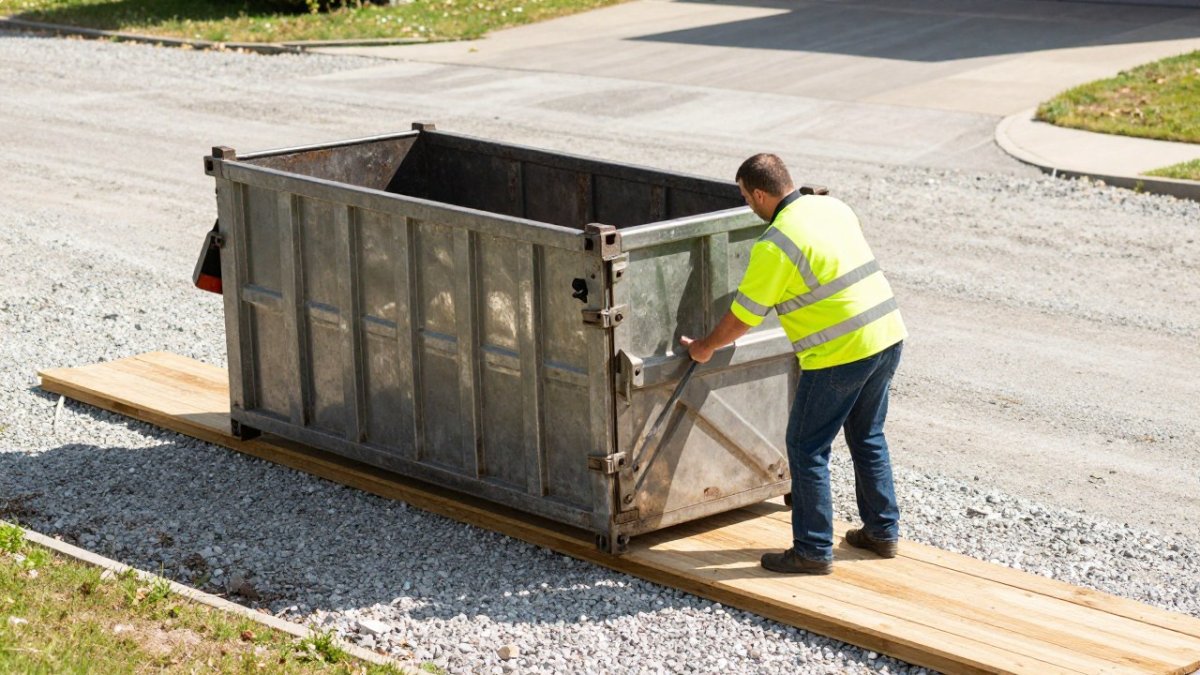
Professional-grade protection uses plywood sheeting or rubber mats under the container's contact points to distribute weight and prevent scrapes and stains.

Before delivery, check your driveway condition and clear vehicles. Ensure the delivery path has at least 60 feet of straight access and 14 feet of vertical clearance. Discuss placement options with your provider if concerned about driveway damage.
Step-by-Step Guide to Renting and Using Your 30-Yard Dumpster
Phase 1: Plan Your Decluttering Timeline and Scope (Days 1-2)
Step 1: Assess Your Decluttering Scope
Walk through your home and estimate items to remove. Assign each room a percentage of container capacity (master bedroom 15-20%, secondary bedrooms 10-15% each, kitchen 10-15%, living areas 15-20%, garage/basement/attic 20-30%, bathrooms 5-10%). Separate items for donation or sale from those to discard.
Step 2: Get a Quote and Confirm Rental Terms
Request a quote based on your project scope. Confirm rental period (7-14 days), weight allowance, overage charges per ton, whether delivery/pickup/taxes are included, extension costs, and driveway protection terms.
Phase 2: Prepare Your Property and Schedule Delivery (Days 2-3)
Step 3: Prepare Your Driveway and Property
Clear the delivery area of vehicles and obstacles. Check for low-hanging branches, power lines, and cable lines. Mark irrigation systems or buried utilities with flags. Confirm at least 60 feet of straight access and 14 feet of vertical clearance. Discuss placement options with your provider if your driveway is older or decorative.
Step 4: Identify and Separate Hazardous Items
Before the dumpster arrives, set aside a "hazardous items" box in a safe location. Identify paint cans, batteries, electronics, propane tanks, and chemicals. Research disposal options for your area in advance.
Step 5: Schedule Delivery and Plan Your Load
Choose a delivery date allowing 7-10 days to complete the project. Plan your loading strategy by room, starting with largest furniture items.
Phase 3: Execute Your Room-by-Room Decluttering (Days 4-11)
Step 6: Declutter in Priority Order
Start with rooms that take longest and free the most space. Load heaviest items (furniture, appliances) first, then lighter debris. Days 4-5: Master bedroom, remove clothing, empty drawers, load furniture. Days 5-6: Secondary bedrooms. Days 6-7: Kitchen, empty cabinets, remove small appliances. Days 7-8: Living areas, remove couches, chairs, bookshelves. Days 8-9: Bathrooms and laundry. Days 9-11: Garage, basement, attic, separate items into keep, donate, discard piles; set aside hazardous items.
Pro Tip Load the heaviest items first (furniture, appliances, metal shelving), then layer lighter debris on top. This distributes weight evenly and helps you stay within your tonnage allowance. Arrange items so air can circulate; tightly packed loads are harder to unload and may exceed weight limits.
Phase 4: Final Load and Pickup (Days 11-14)
Step 7: Load Safely and Arrange Pickup
Do not overfill beyond the rim, as this creates safety hazards during transport and may result in rejection at the facility. Leave 6-12 inches of clearance from the top edge. When your project is complete, call your provider to schedule pickup and confirm that the load is within the weight allowance.
OSHA guidelines for safe manual material handling recommend using proper lifting techniques and team lifts for heavy furniture to prevent back injuries during large cleanouts. For items over 50 pounds, ask a friend or family member to help, or consider renting a dolly or hand truck.
Step 8: Confirm Pickup and Final Walk-Through
Before the truck arrives for pickup, do a final walk-through of your home and property. Ensure no prohibited items are in the dumpster, and verify that the container is not overfilled. Once the dumpster is removed, take photos of your driveway to document its condition for your records.
Key Takeaway A 30-yard dumpster rental typically accommodates a whole-house declutter in 7-10 days when you work systematically room-by-room. The key to staying on schedule and within weight limits is prioritizing bulky items early, separating hazardous materials in advance, and loading strategically so heavier items form a stable base.
Common Mistakes to Avoid When Renting a 30-Yard Dumpster
The most common mistake is underestimating debris weight and overfilling the container, both leading to unexpected fees and delayed pickup.
Avoid these errors: booking without confirming weight allowance and overage rate, mixing prohibited items, overfilling past the fill line, failing to prepare the driveway, and choosing size based on guesswork. Ask upfront about extension costs if your project needs more time.
Consumer advice on hiring waste removal services recommends getting written confirmation of all terms before the container arrives, including delivery date, rental duration, and total cost.
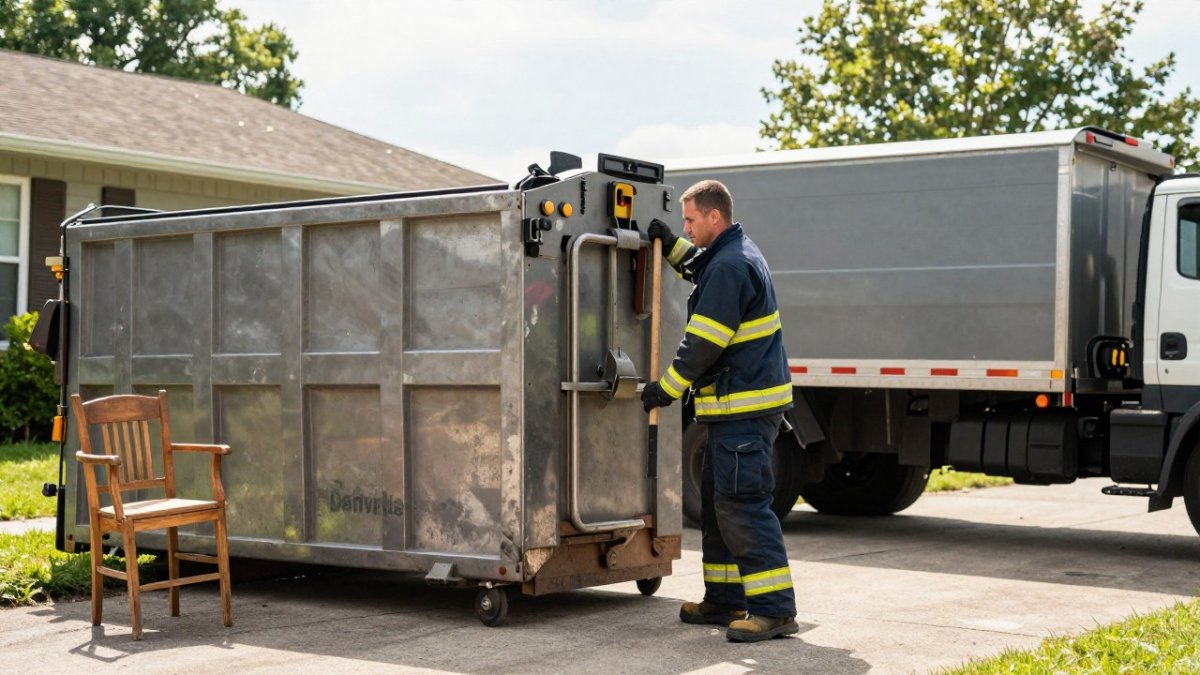
The straightforward solution is to work with a provider that offers transparent pricing and clear communication. JRS Dumpster Rentals operates with a no-hidden-fees policy and provides next-day delivery for urgent projects. Their team, which is firefighter owned and operated, understands the importance of reliable service and community trust. For a whole-house declutter, a 30-yard dumpster rental simplifies the process, letting you focus on the task rather than logistics.
Frequently Asked Questions
How much can actually fit inside a 30-yard dumpster?
A 30-yard dumpster holds approximately 30 cubic yards of material. For a whole-house declutter, this typically accommodates furniture from 2-3 rooms, kitchen appliances, old flooring, general junk, and yard waste combined. The actual capacity depends on how densely you pack items, heavier materials like concrete or soil take up less visual space than bulky furniture. Most homeowners find a 30-yard container sufficient for estate cleanouts or major renovations.
What are the most common mistakes people make when renting a dumpster for a cleanout?
The biggest mistakes are underestimating the volume of debris, not checking weight limits before loading, throwing prohibited items into the container, and failing to arrange driveway protection. Many renters also don't plan their loading schedule, leading to rushed decisions about what to keep or discard. Others assume all rental periods are the same length without confirming their specific rental timeline, which can result in unexpected extension charges.
What items are prohibited from being placed in a residential dumpster?
Hazardous materials like paint, batteries, chemicals, oils, and asbestos cannot go in residential dumpsters. Appliances with refrigerant (refrigerators, air conditioners), tires, and electronics are also typically prohibited due to environmental regulations. Always confirm your specific prohibited items list with your rental provider before loading, as restrictions vary by facility and local waste management rules.
How do I prepare my driveway for a 30-yard dumpster delivery?
Clear the delivery area of vehicles, obstacles, and debris at least 24 hours before arrival. Ensure the dumpster has adequate overhead clearance if trees or power lines are nearby. If you're concerned about damage, ask your rental provider about driveway protection options like plywood sheeting or protective mats. Confirm the exact placement location with the driver upon arrival, and mark any soft spots or areas you want to avoid.
Tackling a whole-house declutter is a significant project, but the right container makes it manageable. You need a provider that delivers on time, protects your property, and charges what it quotes. JRS Dumpster Rentals offers next-day rentals, driveway protection included, and honest, pro-rated weight pricing so your final bill matches your estimate. Request to Book your 30-yard dumpster rental today and clear out your home in one straightforward haul.
Comments