
How to Prevent Dumpster Damage to Your Driveway
Last Updated: November 19, 2026
Quick Summary
Prevent dumpster driveway damage by spreading the container's weight with protection boards or mats under the rails and rollers, placing it on a flat, sound spot, and keeping the load level and within limits. Asphalt needs extra care, especially on hot days, and photographing the driveway before delivery helps you document its condition.
Lay plywood or dimensional lumber under both rails and past each roller by at least a foot.
Asphalt is softer and can dent or soften, so avoid placing containers on hot or fresh asphalt.
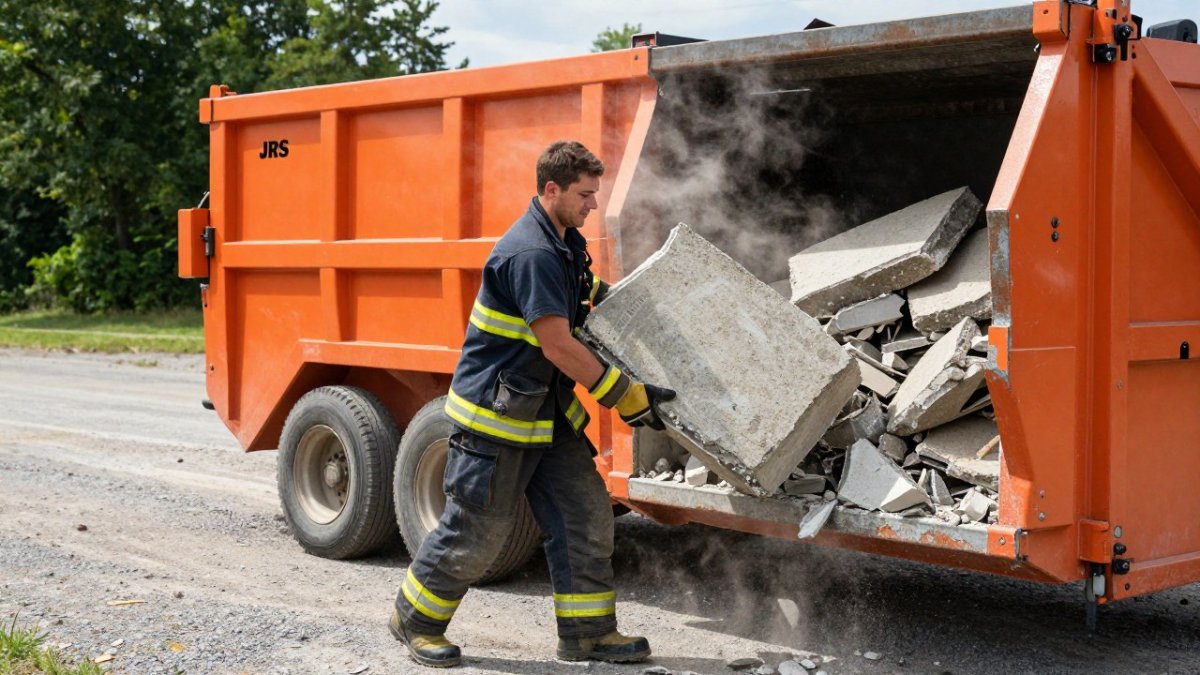
Keep dense materials like concrete, dirt, and shingles low and centered in the container.
Avoid overfilling, and keep the load below the fill line so weight settles evenly.
Take timestamped photos of the driveway from several angles before delivery day.
Table of Contents
Will a Dumpster Damage Your Driveway?
A dumpster can damage your driveway, but dumpster driveway damage is usually preventable. The weight of a loaded roll-off container is concentrated on a few points, and that pressure can crack, dent, or soften the surface underneath. Asphalt is especially vulnerable to heat and pressure. Concrete handles weight better but can still chip or crack if the load is uneven or the surface is already weak.
Most dumpster driveway damage happens for a few predictable reasons: heavy loads, a soft or aging driveway, uneven ground, and rollers or rails dragged across the pavement. Knowing these risks makes it much easier to plan around them.
Many homeowners assume the rental company is responsible for every mark. In practice, the best way to avoid disputes is to prepare the driveway before delivery and document its condition, which is covered later in this guide.
Asphalt vs. Concrete: Why Your Driveway Material Matters
Your driveway material decides how much protection you need. Asphalt is softer, so it can dent, scuff, and soften in warm weather under concentrated pressure. Concrete is harder and holds up better to weight, but it can crack or chip, especially if it is older or already has hairline fractures.
Here is a quick comparison:
Driveway Type | Main Risk | Best Protection Approach |
Asphalt | Dents, scuffs, heat softening | Wood boards or plywood spread across the contact points |
Concrete | Cracks, chips, edge damage | Plywood or rubber mats to distribute weight evenly |
Gravel or pavers | Shifting, sinking, uneven settling | Solid, level base boards before placement |
Asphalt needs extra care on hot days because softened pavement marks more easily. Concrete needs attention to cracks and edges, where a concentrated load can make existing damage worse.
Choosing the Right Dumpster Placement on a Driveway
Placement matters as much as protection. Look for a flat, stable, level spot with clear access for the delivery truck. Avoid areas with soft soil underneath, low-hanging branches, or slopes that could let the container shift.

Before delivery, walk the planned spot and check for:
Cracks, holes, or loose pavement
Standing water or soft ground
Overhead wires, branches, or garage clearance issues
A clear path for the truck to back in and lift the container
Tell the rental provider your driveway type and condition when you book. A good provider will adjust placement or protection based on what you tell them.
Dumpster Driveway Protection Boards and Surface Barriers
Protection boards and surface barriers work by spreading the container's load across a wider footprint, so no single point takes the full weight of the steel rails and rollers. A barrier only helps if it is thick enough, wide enough, and stays put when the container is set down. A thin sheet that buckles or slides can concentrate pressure instead of relieving it.
Here is how the common options compare:
Barrier | Best For | Typical Spec | Main Drawback |
Plywood sheets | Asphalt and concrete in mild weather | 3/4-inch or thicker, exterior-grade, at least 4 ft x 8 ft per sheet | Can slip on wet pavement; thin sheets crush under concentrated rail loads |
Dimensional lumber (2x8 or 2x10 planks) | Spreading weight across uneven or cracked surfaces | Planks laid side by side under each rail and roller | Gaps between planks let the rail drop and concentrate load |
Rubber driveway mats | Hot-weather asphalt, scuff-prone surfaces | Heavy commercial mat, wide enough to cover the full rail contact area | Traps moisture underneath if left down for days; can shift on slopes |
Composite or plastic pads | Short-term placement, light loads | Rigid pad rated for the container's footprint | Less forgiving than wood under heavy point loads; can crack in cold |
A few practical rules apply to every option:
Cover the contact points, not just the middle. The rails and rollers are where pressure concentrates, so the barrier must extend under both rails and past each roller by at least a foot.
Match thickness to load. A light household cleanout tolerates thinner plywood; a heavy load of concrete, dirt, or shingles needs thicker boards or doubled layers.
Lay barriers flat and butt them tight. Overlapping or gapped boards create high spots and low spots that the container settles into.
Secure against slipping. On sloped or smooth pavement, stake or weight the boards so they do not shoot out when the truck sets the container down.
Watch out: a barrier that slides during delivery is worse than no barrier at all, because the container can drop onto bare pavement while the crew is repositioning. Ask the driver to set the container straight down onto the boards rather than dragging it into place.
If you are unsure which barrier fits your surface, tell the rental provider your driveway material, its age, and the debris you plan to load.
Protecting Asphalt from a Dumpster
Asphalt needs the most careful protection. Here are the steps to follow:
Check the weather. Avoid placing a dumpster on fresh or hot asphalt. Heat softens the surface and makes dents more likely.
Lay boards or plywood first. Spread them under the rollers and the rails, not just the middle of the spot.
Use rubber mats on hot days. They cushion the surface and reduce scuffing.
Keep the container level. A tilted dumpster puts uneven pressure on one corner.
Remove the container carefully. Lift it straight up, and do not drag it across the pavement.
Watch out: dragging a loaded container across asphalt is one of the fastest ways to tear the surface. Ask the crew to lift and reposition rather than slide it.
Load Weight, Dumpster Size, and Weight Distribution
Load weight is the single biggest driver of driveway damage, and it is the factor most homeowners underestimate. A roll-off container's weight does not sit evenly on the pavement; it transfers through the steel rails and rollers at a handful of contact points. That means the pressure at each point can be many times higher than the average load per square foot.
The mechanism is simple: pressure equals force divided by contact area. A heavier load raises the force, and a small contact area keeps the divisor low, so point pressure climbs fast. Two things follow from that. First, heavier debris is riskier than bulky debris. Second, how you distribute the load inside the container changes which points take the most stress.
Debris density is the variable most people miss. A container filled with bulky items like cardboard, furniture, or yard clippings may weigh far less than the same container filled with concrete, dirt, roofing shingles, or tile. Those dense materials concentrate weight in a small volume, and if they are piled in one corner, that corner's rail and roller carry a disproportionate share.
Use these guidelines when planning the load:
Match container size to debris type, not just project size. A small cleanout of light household items may fit a smaller container, while a bathroom tear-out of tile and mortar can hit weight limits in a container that looks half empty.
Keep dense materials low and centered. Concrete chunks, dirt, and shingles should sit on the floor of the container and toward the middle, not stacked against one wall or piled at the far end.
Stay below the fill line. Overfilling prevents the load from settling evenly and can shift weight during transport, which stresses the pavement on pickup as well as drop-off.
Ask about weight limits and overage terms before you start. Confirm how the provider measures weight and how any overage is handled, so you can plan loads that stay within the container's rating.
Split heavy loads across multiple hauls if needed. Two lighter containers placed on protected surfaces are usually easier on a driveway than one overloaded container.
A common pattern is that damage shows up not from the total weight alone but from one heavily loaded corner pressing on a single roller. Spreading dense debris across the container floor and keeping the load level addresses that directly.
Delivery-Day Checklist and Documenting Your Driveway Before Pickup
Preparation on delivery day prevents most disputes. Use this checklist before the truck arrives:
Clear the driveway of cars, toys, and loose items
Confirm the placement spot is flat and free of soft patches
Lay out protection boards or mats where the crew can reach them
Take photos or a short video of the driveway from several angles
Note any existing cracks, stains, or dents with the date
Confirm pickup timing and how much access the truck needs
Documenting the driveway before pickup is the most useful step you can take. Photos with timestamps give you a clear record of the surface before the rental, which makes it easy to compare afterward.
When you are ready to schedule, you can book online for a 2 Day, 3-5 Day, or 7 Day rental, with next-day drop-off and flexible scheduling. For a concrete option that avoids asphalt concerns altogether, check out our 6 Yard Concrete Dumpster page, and visit our Plans & Pricing page for pricing and scheduling details before you arrange delivery.
For a deeper look at the rental process, our What to Ask Before Renting a Dumpster article covers what to confirm with the provider before you book. If you are weighing where to place a container at a home, our Residential Dumpster Rental in Danville: A Complete Guide explains the local options.
Ready to protect your driveway and get your project moving? Book online with JRS Dumpster Rentals to get started.
Frequently Asked Questions
Will a dumpster damage my driveway?
It can, especially on newer asphalt, which softens in heat and dents under concentrated weight, and on concrete, which can crack or chip under heavy loads. The risk rises with a fully loaded dumpster, a dumpster set on one corner, and a driveway that is already cracked or old. Placing boards or plywood under the rails and keeping the container level spreads the weight and reduces the chance of lasting marks.
Are plywood boards enough to protect a driveway from a dumpster?
Plywood or heavy wood planks help spread the load and prevent direct contact with the pavement, which covers most common damage such as scuffs and rail dents. They are not a complete solution for heavy loads or hot asphalt, so boards should be thick, flat, and large enough to fit under both rails. Check that boards stay put during delivery and pickup, and inspect them for splintering or moisture buildup.
What should you check after a dumpster is removed?
Walk the driveway in daylight and compare it with photos you took before delivery. Look for new dents, rail marks, cracks, chips, rust stains, and oil spots. Photograph anything new with a timestamp and note its location. Keeping a dated record makes it easier to discuss any damage with the rental provider and to separate new marks from existing wear.
Comments