
How Do You Recycle a Mattress Locally?
Last Updated: November 5, 2026
Quick Summary
To recycle a mattress locally, use a retailer take-back program when you buy a new one, or take it to a municipal drop-off site or transfer station that accepts mattresses. Call ahead to confirm the site takes mattresses and whether a fee applies, and bring a truck or trailer since these sites don't pick up.
Most trash crews won't take a mattress because springs and foam jam truck equipment.
Breaking down a mattress takes about 30 to 45 minutes with the right tools.
Wear gloves and eye protection, since mattress springs are under tension and can snap.
Choose a dumpster rental when you have two or more mattresses or a full cleanout.
A city permit authorizes right-of-way placement but says nothing about HOA covenants.
Table of Contents
Why a Mattress Can't Go Curbside and What to Do Instead
Most trash crews won't touch a mattress, and that's the first thing to know about how to recycle a mattress locally. Curbside programs are built for bags and bins, not bulky bedding.
So the mattress sits in your garage. Or on the porch. Or leaning against the fence where the neighbors can see it.
Here's the good news: a mattress is mostly recyclable. Steel coils, foam, fabric, and wood frames can all be separated and reused. The trick is getting it to the right place. That means a retailer take-back program, a municipal drop-off site, or a roll-off dumpster for a bigger cleanout.
Below, we'll walk through every real option, what each one costs in effort, and how to break a mattress down safely if you go that route.
Your Local Mattress Recycling Options, Ranked by Effort
The easiest option is usually a retailer take-back program, followed by a municipal drop-off site. Breaking the mattress down yourself is the most work but gives you the most control.
Here's the quick comparison before we dig into each one:
Option | Effort Level | Best For | Watch Out For |
Retailer take-back | Low | Buying a new mattress | Delivery-area limits |
Municipal drop-off | Medium | One or two mattresses | Limited hours, fees |
Curbside bulk pickup | Medium | Scheduled city service | Not offered everywhere |
Dumpster rental | Low to medium | Full room or estate cleanouts | Placement rules |
Retailer Take-Back Programs
Many mattress retailers will haul away your old mattress when they deliver a new one. Some do it free, and some charge a removal fee tacked onto the delivery. Ask before you buy.
The catch: most programs only serve the delivery area, and they usually want the old mattress in reasonable condition. If you're not buying a new mattress, this route is closed.
Municipal Drop-Off and Transfer Stations
Your city or county may run a drop-off site or transfer station that accepts mattresses. Some recycle them; others just landfill them. Call ahead and ask two questions: do you take mattresses, and is there a fee?
Bring a truck or trailer, because these sites don't pick up. Check hours too, since many close early on weekends.
Mattress Disposal Fees: What Drives the Price Up or Down
Mattress disposal fees vary widely by location and provider. The biggest factors are whether the site recycles or landfills, how bulky the item is, and whether you drop it off or need pickup.
A few things move the number up or down:
Recycling vs. landfill: Sites that actually recycle often charge more because processing costs money.
Drop-off vs. pickup: Hauling it yourself is cheaper than paying for collection.
Weight and size: King mattresses cost more than twin.
Springs and box springs: These can carry extra handling charges.
If you're comparing costs, our average cost of dumpster rental guide breaks down what a rental actually runs. And if you're worried about weight pushing your bill up, read our tips on how to avoid dumpster weight overage fees.
How to Break Down a Mattress for Recycling Without Hurting Yourself
Breaking down a mattress takes about 30 to 45 minutes with the right tools. The goal is to separate the cover, foam, and springs so each part can be recycled or tossed correctly.

Safety first. Mattress springs are under tension and can snap. Wear gloves and eye protection the whole time.
Tools to Have Ready Before You Start
Utility knife with fresh blades
Heavy work gloves
Safety glasses
Pliers or wire cutters
A tarp or drop cloth
Twine or zip ties for bundling
Work on a flat surface, cut along the seams, and pull the cover back slowly. Roll the foam and tie it. Bundle the springs so they don't spring open in the truck. Watch out: never cut toward your body, and keep kids and pets out of the work area.
When a Dumpster Rental for Bulky Items Makes More Sense
A dumpster rental for bulky items makes more sense when you're clearing more than one mattress. If you're doing an estate cleanout, a bedroom refresh, or a whole-house purge, a roll-off dumpster beats hauling piece by piece.
Here's when we'd recommend it:
You have two or more mattresses to get rid of
You're also clearing furniture, box springs, and clutter
You don't own a truck or trailer
You want one pickup instead of five trips
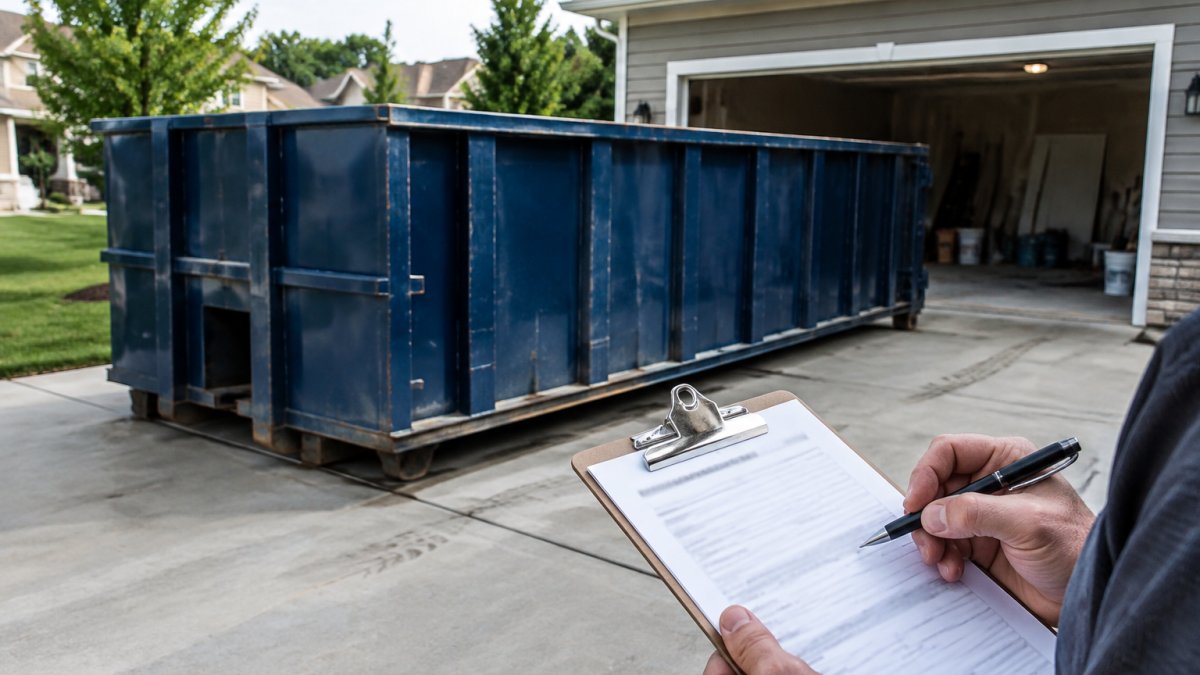
A roll-off dumpster sits in your driveway, and you fill it at your own pace. Our team protects the driveway and gives you a clear quote with no hidden fees. You can see plans and pricing on our site before you commit.
HOA Rules vs. City Rules: Two Sets of Eyes on Your Mattress
Your city and your HOA are two separate rulebooks, and both can apply to where you put a mattress or dumpster. A municipal ordinance might allow curbside placement while your HOA bans it outright. Most guides stop there.
City rules are enforced by code enforcement officers who respond to complaints or conduct periodic sweeps.
HOA rules are enforced through the association's governing documents, the covenants, conditions, and restrictions (CC&Rs), and through the board or a management company.
Here is where the two rulebooks typically collide:
Visibility: Many HOAs prohibit any item visible from the street or from neighboring properties, which can ban a mattress on the driveway even when the city allows it there.
Duration: A city might allow a bulky item at the curb for a set number of days; an HOA might require it be removed within hours of pickup or stored out of sight until collection day.
Dumpster placement: HOAs commonly restrict where a roll-off can sit, how long it can stay, and whether it needs a protective mat or board underneath.
Advance notice: Some associations require written notice before any dumpster or bulky item is placed, even on your own driveway.
A common mistake is assuming a city permit covers you with the HOA. It doesn't. A city permit authorizes placement in the public right-of-way; it says nothing about private covenants.
If you rent, the calculus changes again. Your lease may incorporate the HOA rules by reference, which means a violation could put you in breach of your rental agreement even if the city never gets involved.
Liability, Insurance, and Keeping Your Property Protected
Liability is the part most guides skip.
Start with placement. Items on your own private property are generally your responsibility, and your homeowners or renters insurance is the first line of coverage if someone is injured there. Items in the public right-of-way are a murkier zone.
A few concrete scenarios worth thinking through:
A delivery driver trips over a mattress at the curb. If the mattress was in the right-of-way without a permit or outside the allowed window, your exposure is higher than if it was properly permitted and placed.
A roll-off dumpster scratches a neighbor's car. The rental agreement usually determines whether the hauler's commercial auto or general liability policy responds, or whether your homeowners policy does. Read that section before you sign.
A dumpster sits on the street and is struck by a vehicle. If placement required a permit and you skipped it, the permit requirement itself can become evidence of negligence.
A mattress left in a shared alley or HOA common area. Responsibility can shift to the HOA or to whoever placed it, depending on the governing documents.
Here is how to protect yourself in practice:
Keep the mattress or dumpster on private property when you can. A driveway placement is almost always lower-risk than a street placement.
Use safety barricades and reflective markers if the item must sit near the street, especially overnight.
Confirm your rental agreement spells out who is responsible for placement and what insurance the hauler carries. Ask for the certificate of insurance if it isn't attached.
Ask your hauler about insurance and damage coverage before the truck arrives, and get the answer in writing.
Document the placement with a photo showing the item is on private property and clear of the sidewalk, in case a complaint arrives later.
Reputable haulers carry commercial general liability and auto coverage, and a clear rental agreement protects both sides. The agreement should state who is responsible for permit acquisition, who is responsible for placement, and what happens if the item is moved or damaged.
Watch out: a hauler's insurance may exclude damage caused by improper placement, so the protection you think you have can evaporate if the dumpster ends up somewhere the permit didn't authorize.
Booking Your Mattress Removal and Cleanout Pickup
Booking a pickup is the last step, and it's simpler than most people expect. Decide on your dumpster size, pick a drop-off date, and confirm placement.
Before you book, run through this quick checklist of questions to ask:
What's included in the quote?
How is the driveway protected?
Can you deliver next day?
What happens if I underestimate the weight?
Who handles permits if the dumpster sits near the street?
We put together a full list in our guide on what to ask before renting a dumpster. When you're ready, you can book online and choose from our rental sizes, with next-day drop-off available.
Frequently Asked Questions
Can you put a mattress in a standard dumpster rental?
Often yes, but check with the hauler first. Many dumpster companies accept mattresses as bulky items, though some charge an extra handling fee or ask you to bag and wrap the mattress. A mattress eats up a lot of vertical space, so a 10-yard dumpster may fill faster than expected during an estate cleanout. Ask about weight limits too, since a soaked or king-size mattress adds pounds quickly.
How do mattress disposal fees work, and what makes them vary?
Fees depend on how you dispose of it. Curbside bulk pickup programs often charge a per-item sticker or flat fee. Transfer stations and recycling drop-offs may charge by the piece or by weight. Retailer take-back programs sometimes bundle the fee into delivery. The variables are size, whether the mattress is recycled versus landfilled, and whether you drop it off or need it collected.
What should I do if my mattress is too damaged to donate?
Recycling is still an option even when a mattress is stained, torn, or sagging. Most recyclers separate steel springs, foam, and fabric regardless of condition, so damage does not disqualify it from a recycling stream. If a drop-off center rejects it, ask your hauler about bulk pickup or a dumpster rental for bulky items. Never leave a damaged mattress at the curb without confirming your local pickup rules first.
Are there local drop-off centers for old mattresses near me?
Many counties run transfer stations or recycling centers that accept mattresses, and some retailers offer drop-off during store hours. Search your county's solid waste department page for mattress recycling, then call ahead to confirm hours, accepted sizes, and whether a fee applies. If you are clearing out a whole house, it is often simpler to schedule one pickup than to make several trips with a trailer.
Getting rid of an old mattress shouldn't be a headache. Whether you recycle it, break it down, or rent a dumpster for a bigger cleanout, the right plan saves you time and money. JRS Dumpster Rentals is firefighter owned and operated, with next-day rentals, driveway protection included, and honest pricing with no hidden fees. Get started with JRS Dumpster Rentals and clear that clutter for good.


Comments